3D Printing Steel: Grades, Processes and What Each One Holds

Steel prints two ways. Either a laser melts it — SLM — or a print head glues it and a furnace sinters it — binder jetting. Same powder, different physics, and the choice between them decides which grades you can run and what the finished part will hold.
This page is about the material, not the machine. It covers the six grades that actually get printed in industry, what each process does to them, what comes out the other end in density and tolerance, and where printing steel loses to machining or casting.
Two processes, and why the choice matters for steel
SLM melts each layer into a solid pool. The part comes out at 99 percent density or better without a furnace, and the residual stress that builds up gets removed by a stress-relief cycle afterwards.
Binder jetting deposits a binder across the whole layer at once, then sinters the green part in a furnace. The print step is fast because it is parallel; the furnace step is the calendar time, and shrinkage during sintering has to be compensated in the model.
The practical difference for steel: SLM holds a tighter tolerance as-built and can go directly to stress relief. Binder jetting wins on throughput per build and on the cost per part at volume, but it needs a sintering furnace sized for the batch and a shrinkage model that has been validated on the alloy.
The grades that actually get printed
Thirty-plus alloys are qualified across our range, but six do most of the work. The table below is what a foundry or a machining shop should expect to be able to source, not a full catalogue.
| Grade | Process | Typical use | What it gives you |
|---|---|---|---|
| 316L stainless | SLM, binder jetting | Manifolds, brackets, corrosion-resistant parts | Weldable, corrosion resistant, easy to post-process |
| 17-4PH stainless | SLM, binder jetting | Structural parts needing strength and hardness | Hardens by aging; good strength-to-cost ratio |
| 420 stainless | SLM | Mould inserts, wear surfaces | Hardenable to 50+ HRC after heat treatment |
| H13 tool steel | SLM | Die casting inserts, hot work tooling | Hot hardness, thermal fatigue resistance |
| 1.2709 maraging | SLM | High-strength tooling, conformal cooling | Very high strength after aging, dimensionally stable |
| Ceramic-filled steel composite | Binder jetting | Abrasion-resistant parts | Hard phase in a steel matrix, printed as one body |
If the grade you need is not on this list, the question to ask is not “can you print it” but “is there a validated process window for it.” Almost any steel powder can be printed once. Being able to print it consistently on a Wednesday six months from now is a different claim, and it depends on the supplier having done the validation work.
Density, and what that means for the part
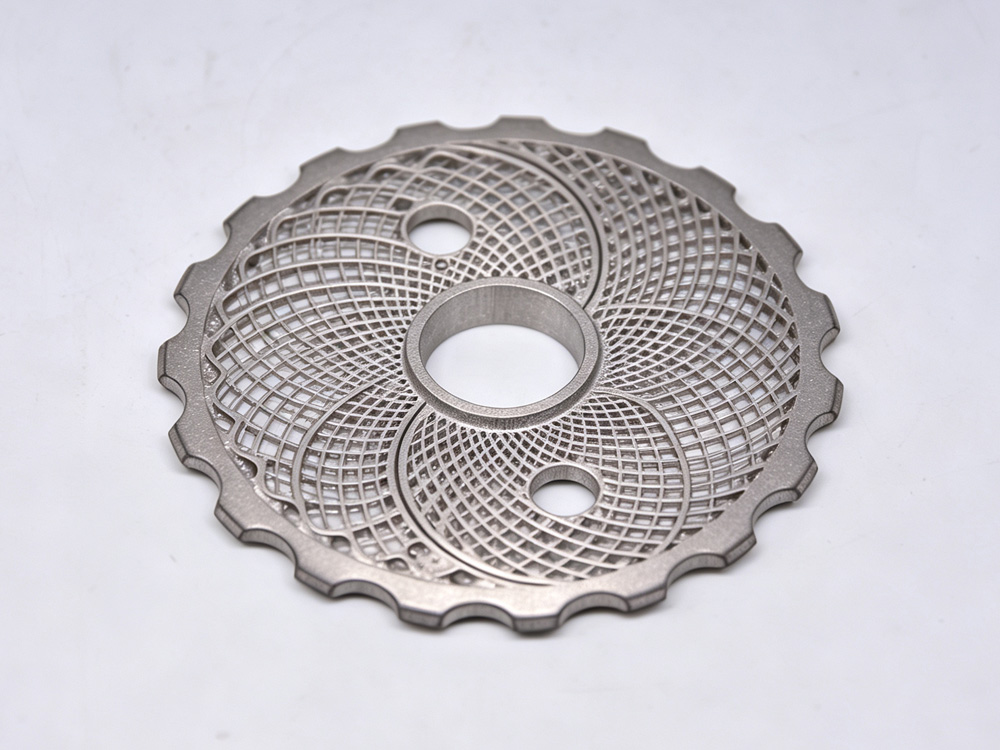
SLM reaches 99 percent density or better in one operation. The remaining fraction is lack-of-fusion porosity, usually concentrated where the part meets the build plate or where a parameter was pushed too fast.
Binder jetting lands at 97 to 99 percent after sintering. That is not a defect — it is the nature of the process. For a manifold, a bracket or a housing it is fine. For a part that will see fatigue cycling in a fracture-critical application, it usually is not, and the answer is either SLM or a HIP cycle afterwards to close the residual porosity.
Two post-processing steps change the number materially. Stress relief removes the residual stress but not the porosity. Hot isostatic pressing closes the porosity but costs a separate furnace cycle and a per-part handling step. Neither is included in a machine quotation.
Tolerances and surface
As-built, neither process holds a machining tolerance. The numbers that matter are the ones on the drawing, and they decide whether the part is used as printed or goes to a mill afterwards.
- SLM, as-built. Roughly ±0.1 mm on small features, degrading with part size and with distance from the build plate. Surface Ra 8 to 20 µm depending on face orientation.
- Binder jetting, as-built. Roughly ±0.3 mm after sintering, because shrinkage compensation is never exact across a full bed. Surface Ra 6 to 15 µm, more uniform than SLM because there is no stair-step from the melt pool.
- Machined after printing. Both processes hold ±0.02 mm once the part is fixtured and cut. Add a machining allowance of 0.5 to 1 mm on any face that will be cut.
The practical consequence: a steel part with a sealing face or a bearing bore will be machined regardless of which process printed it. Budget the second operation before comparing the two.
Where each process wins on steel
The choice is decided by part count and part shape, not by material.
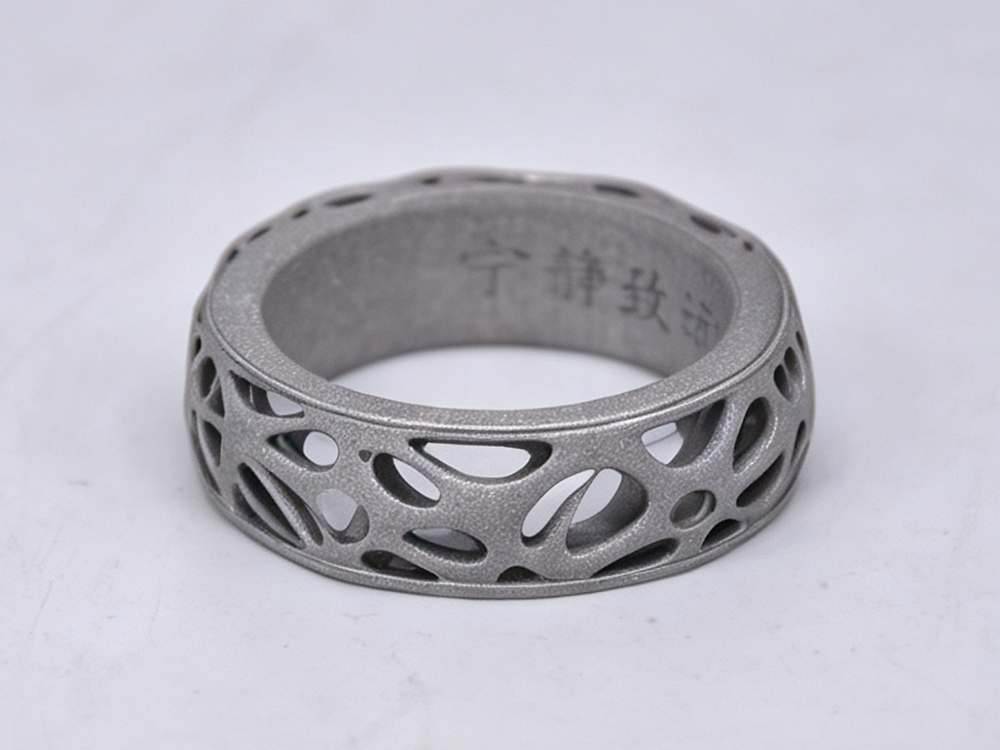
SLM wins on small, detailed, tolerance-critical parts: tooling inserts with conformal cooling, thin-wall components, lattices, and anything under roughly 150 mm where the as-built tolerance matters. It also wins when the part needs to be used immediately, because there is no furnace cycle in the critical path.
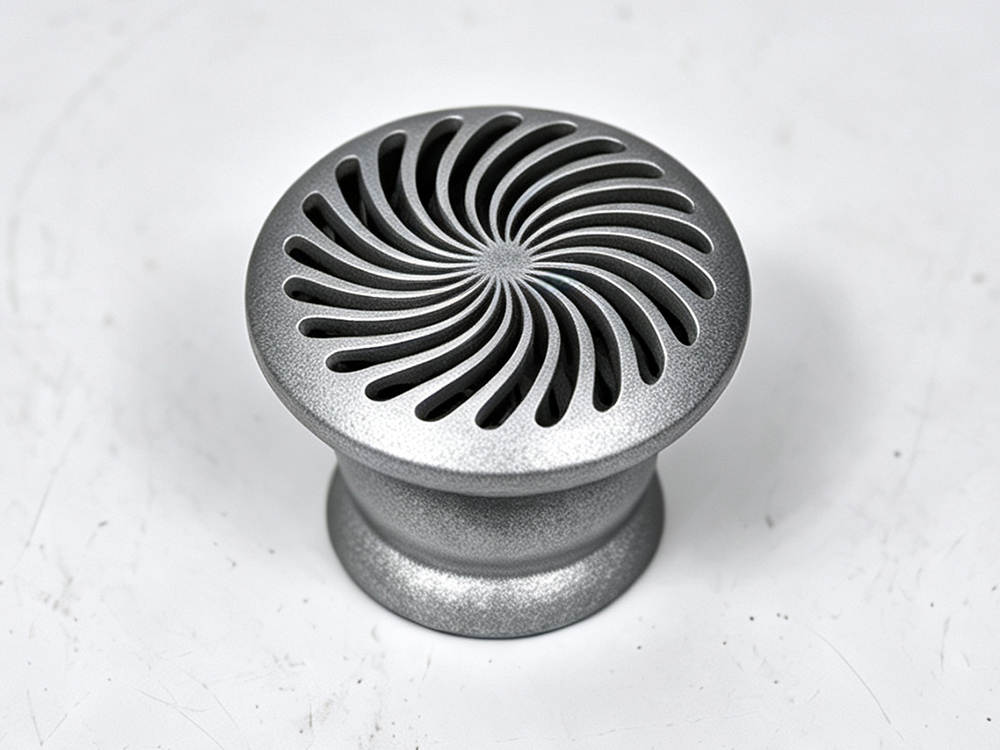
Binder jetting wins on volume and on size. A full bed of brackets prints in one cycle and sinters in one batch, and the cost per part drops sharply as the bed fills. It is also the only option for larger steel parts in our range — the binder jetting platforms go to 800 × 500 × 400 mm where the SLM systems top out at 300 × 300 × 250 mm.
What steel printing costs per part
Three routes make the same steel part, and the comparison is worth doing before any of them is chosen.
Printed. Powder cost, machine time, support removal or furnace cycle, and machining on any tolerance face. For a 200 g SLM part the powder alone is a meaningful line item, and the post-processing is usually larger than the print.
Machined from solid. Bar stock plus machine time. For simple geometry this is almost always cheaper than printing, and it is faster. It stops making sense when the geometry has internal channels or when the buy-to-fly ratio gets bad.
Cast. A pattern, a mould, a pour and a fettle. The tooling cost dominates at low volume, and the per-part cost falls hard at high volume. For a steel part that will be made 5,000 times, casting wins on cost almost every time — the exception is when the geometry is impossible to cast.
Our metal 3D printer cost guide breaks the printed route into its actual line items, including the post-processing that vendors leave out. The SLS cost breakdown does the same arithmetic for the sand and wax side.
When printing steel is the wrong answer
Four cases where we tell customers to do something else.
Simple geometry under 100 mm. A machined part is cheaper, faster and toleranced better. Printing buys nothing when there is no internal feature to reach.
High volume of one part number. Above a few thousand units a year, casting or a conventional machining cell beats printing on cost per part. Printing wins on complexity and on the first few hundred parts, not on steady-state volume.
Parts that need a forging-grade fatigue life. Printed steel after HIP is good, but it is not a forging. If the drawing specifies a forged and ultrasonically inspected part, printing is not a substitute — it is a different product.
Parts large enough to exceed the chamber. A 900 mm steel housing cannot be printed on any platform in the range. Print a sand mould and cast the housing instead, which is faster and cheaper than any metal printing route at that size.
The platforms that print steel
| Process | Model | Build volume (mm) | Steel capability |
|---|---|---|---|
| Binder jetting | 3DPTEK J160R | 160 × 65 × 65 | Stainless and tool steel, ceramic capable |
| 3DPTEK J400P | 400 × 400 × 300 | Stainless and tool steel, ceramic capable | |
| 3DPTEK J800P | 800 × 500 × 400 | Largest steel binder jetting platform in the range | |
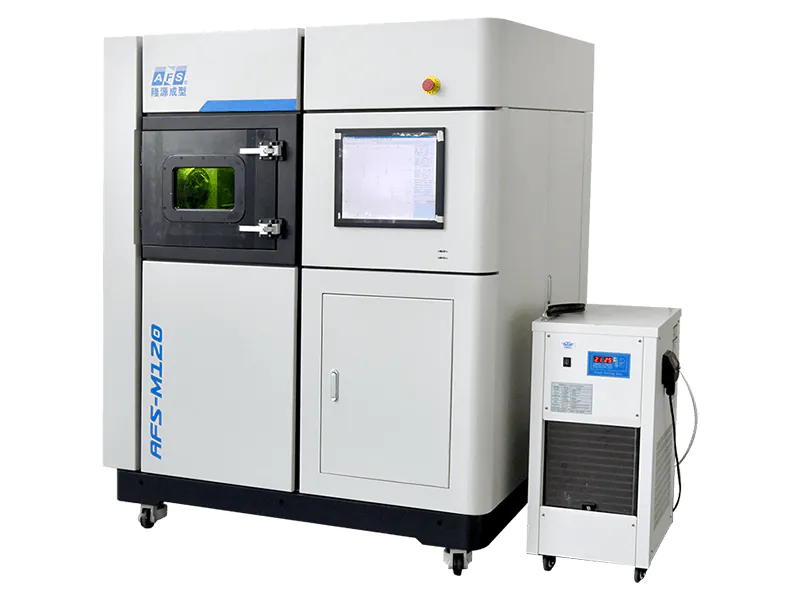
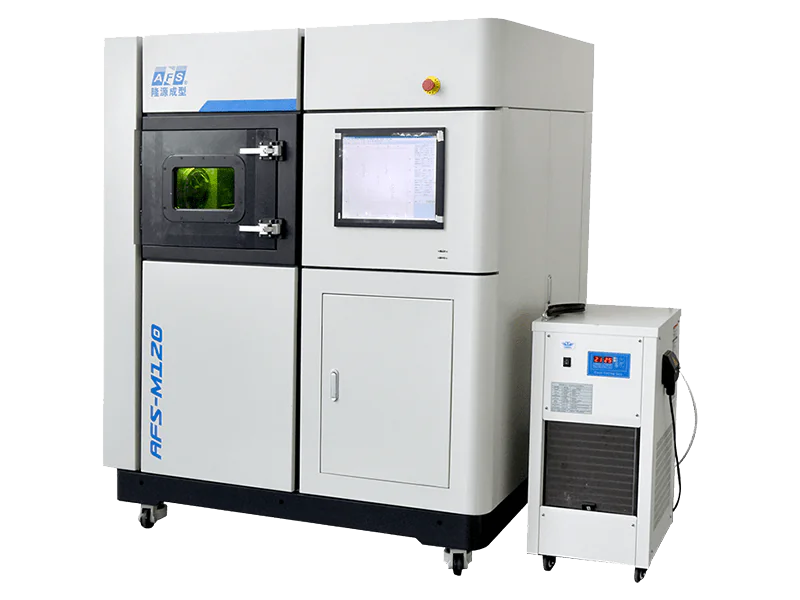
| SLM | AFS-M120 | 120 × 120 × 150 | Single laser, precision steel parts |
| AFS-M120X | 120 × 120 × 150 | Two-material gradient — steel to a second alloy | |
| AFS-M300XAS | 300 × 300 × 250 | Multi-material plus in-process machining |
Full specifications, including the grades qualified on each platform, are on the metal 3D printer range page. The AFS-M120XT adds multi-axis gradient capability on a 120 × 150 × 150 mm platform for steel-to-steel transitions.
Frequently asked questions
Can you 3D print steel?
Yes, two ways. SLM melts steel powder with a laser to 99 percent density or better. Metal binder jetting prints a green part with a binder and sinters it in a furnace to 97 to 99 percent density. Both run stainless and tool steels; the choice depends on part size, volume and tolerance.
What is the strongest steel you can 3D print?
Maraging steel 1.2709 reaches very high strength after aging and holds dimensional stability through the heat treatment, which is why it is used for tooling. For corrosion resistance, 316L is the workhorse. For hardness after heat treatment, 420 and H13 both reach 50 HRC and above.
Is 3D printed steel as strong as machined steel?
After HIP and heat treatment, printed steel reaches mechanical properties close to wrought for most alloys. The exception is fatigue-critical applications where a forging specification is on the drawing — printed steel is a different product, not a substitute. Anisotropy in the build direction is real and has to be designed around.
How much does it cost to 3D print steel?
Per part, the cost is dominated by post-processing rather than the print. Powder, machine time, support removal or sintering, and machining on tolerance faces all contribute. For a small part the machined route is usually cheaper; printing wins when the geometry has internal features or the volume is between prototype and a few hundred units.
Can binder jetting print steel parts larger than SLM?
Yes, considerably. The binder jetting platforms in our range go to 800 × 500 × 400 mm where the SLM systems top out at 300 × 300 × 250 mm. Sintering shrinkage has to be compensated, which is why the process window has to be validated per alloy.
Related Reading
For the platform side, industrial metal 3D printers lists all seven systems with build volumes and configurations. For the process question behind the choice, SLS vs SLM separates the two laser routes.
Tell us the grade and the geometry
Send the drawing, the steel grade and the annual volume. We will tell you whether printing it makes sense, which process fits, and — in the cases where machining or casting is cheaper — that instead. Printing a part that should have been cast is an expensive way to learn the difference.