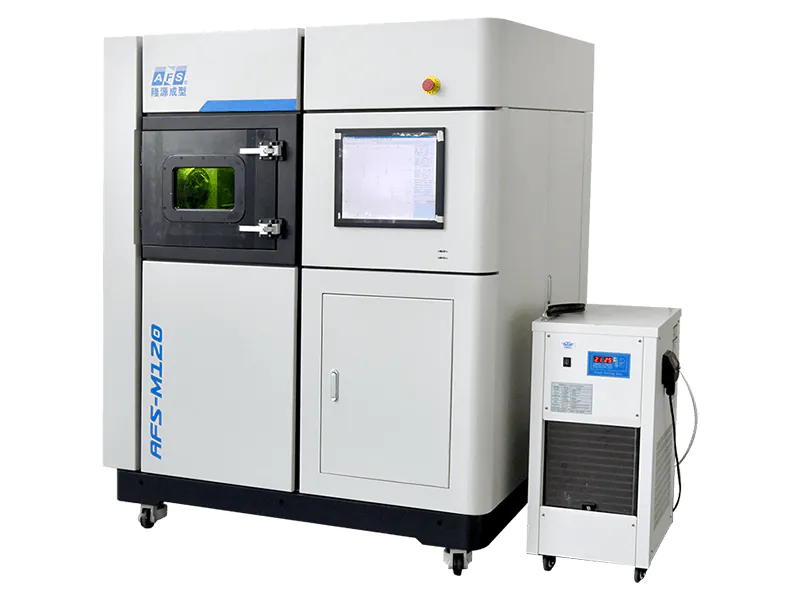
Rapid Prototyping: Definition, Methods, Lead Times and Cost
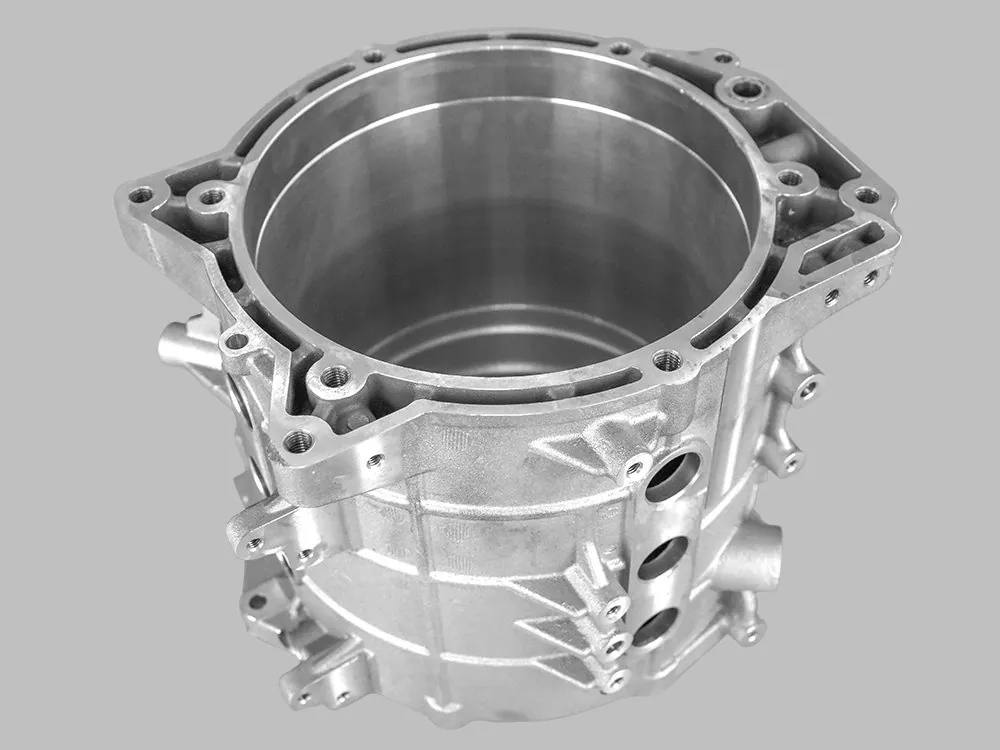
Rapid prototyping is any process that turns a 3D model into a functional part in days rather than weeks. There are six commercial routes: CNC machining, SLA and DLP, SLS, SLM, binder jetting, and patternless sand casting. Polymer parts arrive in 1–3 days; cast metal parts in 5–12 days, measured from CAD release to first article.
Key takeaways
- Lead time, not unit cost, is what separates the six methods — polymer printing is 1–3 days, metal printing 5–12, and a cast metal part 5–12 days when the pattern is printed rather than made.
- Patternless sand casting removes the pattern shop entirely: the mold is printed from CAD, so the first casting needs no tooling.
- Below roughly 20–50 pieces, printing is usually cheaper per part than making tooling. Above that, tooling amortises and wins.
- Surface finish and tolerance decide more projects than material strength does.
- Binder jetting reaches full density in a sintering furnace, not on the build plate — this changes both the quote and the lead time.
What is rapid prototyping?
Rapid prototyping describes any manufacturing route that produces a physical part directly from a digital model without dedicated tooling. The defining constraint is not the technology — it is the absence of a pattern, mold, die or fixture that must be made first. Remove tooling from the critical path and the lead time collapses from weeks to days.
The term dates from the 1980s, when stereolithography was the only option. Today it covers six commercially distinct processes that share almost nothing except that property: no tooling up front.
How it differs from conventional prototyping
Conventional prototyping makes the tool before it makes the part. A machined prototype still needs a fixture and a programme. A cast prototype needs a pattern, a core box and a mold. Each of those steps is billable, takes calendar time, and must be repeated when the design changes.
The practical difference shows up on the second revision. With a pattern-based route, revision two means modifying or remaking the tool. With a printing route, revision two means re-exporting the model. That is why teams working on geometry that is still moving migrate to printing first and to tooling later.
The six rapid prototyping methods that matter in 2026
These are the processes that commercial buyers actually choose between. Each one occupies a distinct position on material, accuracy, throughput and cost.
CNC machining — the baseline
Subtractive, works from solid billet, and remains the reference point for dimensional accuracy and surface finish on metal. Lead times are 2–7 days for simple parts and longer for complex fixturing. It cannot produce internal channels that a tool cannot reach, and it cannot consolidate an assembly into one piece.
SLA and DLP — polymer, highest detail
Resin processes cure a liquid photopolymer layer by layer. They deliver the finest detail of any polymer method — features down to roughly 0.1 mm and surfaces that need little finishing. The limitation is mechanical: cured resin is brittle and degrades under sustained load or UV exposure, so it suits form-and-fit verification rather than functional testing.
SLS — polymer, functional strength
Selective laser sintering fuses polymer powder — most commonly PA12 — without supports, because the surrounding powder holds the part. That single property unlocks stacked and nested geometries that would otherwise need support removal. Parts are isotropic and tough enough for functional testing. Lead times run 2–5 days.
SLM — metal, fully dense
Selective laser melting fully melts each metal layer — one of the two families covered in our metal 3D printer comparison — producing parts at 99.5–99.9% relative density with mechanical properties comparable to wrought material after heat treatment. It requires support structures, stress relief, and usually machining on critical faces. Lead times are 5–12 days depending on height and post-processing.
Binder jetting — metal or ceramic, highest throughput
A printhead deposits binder into a powder bed, building a green part at inkjet speed. The part is then debinded and sintered to full density — so the furnace, not the printer, determines final properties. The economics differ from SLM: throughput per machine is higher, per-part cost at volume is lower, and the sintering step is quoted separately.
Patternless sand casting — the fastest route to a cast metal part

A sand mold and core are printed directly from the CAD model — see the sand 3D printer range for build envelopes and sand systems. No pattern, no core box, no pattern shop. The mold is poured in the conventional way, so the resulting casting is a real casting — same alloy, same properties, same inspection standards — but the tooling step has been removed from the schedule.
| Method | Material | Typical tolerance | Surface (Ra) | Lead time | Best for |
|---|---|---|---|---|---|
| CNC machining | Metal, engineering plastics | ±0.05 mm | 0.8–3.2 µm | 2–7 days | Exact material properties, tight tolerances |
| SLA / DLP | Photopolymer resin | ±0.1 mm | 1.6–3.2 µm | 1–3 days | Fine detail, form and fit |
| SLS | PA12, TPU, glass-filled nylon | ±0.3 mm or ±0.3% | 8–12 µm | 2–5 days | Functional polymer parts, no supports |
| SLM | Stainless, titanium, aluminium, CoCr, nickel | ±0.1 mm | 8–15 µm as-built | 5–12 days | Fully dense metal, internal channels |
| Binder jetting | Stainless, tool steel, CoCr, ceramic | ±0.2 mm | 10–15 µm | 7–14 days | Volume metal parts, low cost per part |
| Patternless sand casting | Cast iron, steel, stainless, aluminium | ±0.5 mm (ISO 8062 DCTG 5–6) | 12–25 µm | 5–12 days | Cast metal parts without tooling |
Tolerances are typical achievable values on parts of moderate size; large or thin-walled parts widen them. Sand casting tolerances follow ISO 8062.
How long does rapid prototyping actually take?
Lead time is the number buyers ask about first, and the number most published comparisons handle badly. A lead time is meaningless without its preconditions: whether material is in stock, whether post-processing is included, and whether the model is final.
| Method | Build time | Post-processing | Total, material in stock | Preconditions |
|---|---|---|---|---|
| SLA / DLP | 4–12 h | Wash and cure, 2–4 h | 1–2 days | Resin in stock, no painting |
| SLS | 8–24 h | Depowder and bead-blast, 2–6 h | 2–4 days | Nesting in a shared build |
| SLM | 12–48 h | Stress relief, support removal, machining | 5–12 days | Heat-treat slot available |
| Binder jetting | 6–20 h | Debind and sinter cycle, 24–48 h | 7–14 days | Furnace capacity |
| Patternless sand casting | 8–20 h for mold and core | Pour, shakeout, cut, heat treat | 5–12 days | Melting schedule, pattern-free design review |
| CNC machining | 4–30 h | Deburr, anodise or plate | 2–7 days | Programme written, material in stock |
What changes the lead time
- Whether material is in stock. An uncommon alloy can add one to three weeks before the build even starts — and this is the single largest source of missed dates.
- Part height. Layer-based processes are governed by Z height, not by volume. A tall, thin part can take longer than a compact, heavy one.
- Post-processing route. As-built SLM parts are not usable on functional interfaces; machining, heat treatment and surface finishing routinely take longer than the build itself.
- Number of revisions. This is where printing wins outright. A revision costs hours, not weeks.
What does rapid prototyping cost?
Cost divides into two very different questions: the price of a part, and the price of a capability. The first decides individual projects; the second decides whether to bring the process in-house.
Per-part cost at low volume
| Method | 1 part | 10 parts | 100 parts | Cost driver |
|---|---|---|---|---|
| SLA / DLP | US$80–400 | US$40–180 each | US$15–60 each | Build volume used, resin type |
| SLS | US$150–600 | US$60–220 each | US$25–90 each | Nesting density, powder reuse |
| SLM | US$400–2,500 | US$250–1,200 each | US$120–600 each | Height, support volume, machining |
| Binder jetting | US$300–1,500 | US$120–500 each | US$40–180 each | Furnace batch, part count per build |
| Patternless sand casting | US$900–4,000 | US$600–2,000 each | US$250–900 each | Mold volume, alloy, machining allowance |
| CNC machining | US$200–1,200 | US$120–600 each | US$60–250 each | Set-up time amortised, material removal |
Ranges reflect prototype quantities of parts roughly 100–200 mm in size. Complex geometry, tight tolerances and certified material push toward the upper bound.
When the cost crosses over to tooling
The crossover is the quantity at which the amortised cost of tooling plus a cheaper per-part price falls below the printed per-part price. In practice it sits in a wide band, roughly 20 to 50 pieces for polymer parts and 50 to 200 for castings, and it moves with three variables:
- Tool cost. A simple sand pattern is inexpensive; a multi-cavity die is not.
- Delta per part. The gap between printed and tooled unit cost determines how fast tooling pays back.
- Probability of change. If the design has a meaningful chance of changing, the effective crossover moves far to the right — because a modified tool costs nearly as much as a new one, while a modified model costs nothing.
For industrial equipment that is worth stating plainly: buying a machine only makes sense once the annual volume and the geometry stability both justify it. Below that line, buying parts is the correct decision.
Choosing by part, not by process
Buyers who start from the process list usually end up with the wrong process. Start from the part instead, and answer four questions in order.
- Does it have to be metal? If polymer will survive the test, the lead time halves and the cost falls by an order of magnitude.
- What is the largest single feature? Build envelope is the hardest constraint to work around, and the one most often discovered late.
- What tolerance sits on the functional interface? Often only one or two faces are critical; that changes the post-processing route rather than the process.
- How many, and how likely is the design to change? This single question decides printing versus tooling more often than cost does.
If you need a cast metal part

The conventional answer is to make a pattern, then a mold, then a casting. The patternless casting route is described in detail separately; — five to eight weeks from CAD to first article. The patternless route compresses this to five to twelve days by printing the mold and core directly. Alloy selection, mechanical properties and inspection standards are unchanged; only the tooling step disappears.
That route is worth examining when the part is large, the geometry is complex, the quantity is low, or the design is still moving. It is less attractive when the part is small, simple and needed in thousands — in that case a permanent pattern amortises quickly and conventional tooling remains the cheaper route.
If you need 100+ identical parts
At that quantity the question stops being “which prototype method” and becomes “which production method”. Printing remains viable when the geometry cannot be tooled, when the material is difficult to machine, or when the design is expected to change within the production run. Otherwise tooling wins on unit cost and should be started early, because tool lead time then becomes the constraint.
Where rapid prototyping stops being prototyping
The boundary is not a technology boundary, it is an economic one. A process stops being prototyping when the per-part cost curve flattens and the design stops changing. Two signals mark that point:
- The revision rate falls below roughly one change per ten parts. Above that rate, tooling is a liability.
- Annual volume exceeds the crossover band for that part family and material.
Neither signal depends on the process being “advanced”. A binder jetting line producing ten thousand parts a year is production manufacturing, not prototyping. A five-axis machining centre making three parts a year is prototyping, not production. The label follows the economics.
Have a part in hand? Send the model and the target volume — our application engineers will recommend the route and, where it helps, print the part before you commit to anything. Rapid casting service · Rapid prototype casting
Frequently asked questions
Is rapid prototyping the same as 3D printing?
No. 3D printing is one family of rapid prototyping methods. CNC machining, urethane casting and patternless sand casting are also rapid prototyping, because none of them require dedicated tooling before the first part. The defining property is the absence of tooling, not the presence of a printer.
How accurate is rapid prototyping?
It depends on the process. Resin printing and CNC machining reach ±0.05 to ±0.1 mm. SLS is typically ±0.3 mm or ±0.3%, whichever is greater. SLM reaches ±0.1 mm before machining. Sand casting follows ISO 8062 and typically lands in DCTG 5–6, roughly ±0.5 mm on moderate sizes.
Can I get a metal part without tooling?
Yes, by two routes. Metal printing — SLM or binder jetting — builds the part directly. Patternless sand casting prints the mold instead of the part, then casts it conventionally. Both avoid a pattern; they differ in material range, cost per part and surface finish.
What is the cheapest rapid prototyping method?
For a single small polymer part, resin printing is usually cheapest at US$80–400. For ten or more functional polymer parts, SLS is often cheaper per part because parts nest in a shared build. Metal is a different order of magnitude in every method.
How many parts before tooling makes sense?
Roughly 20–50 pieces for polymer parts and 50–200 for castings, but the number moves with tool cost, the per-part delta and the probability of design change. If the design is still moving, the crossover sits far higher than the arithmetic suggests.