
Sand 3D Printer Japan: EV Motor Housings, ¥3M Entry and What Production Systems Cost
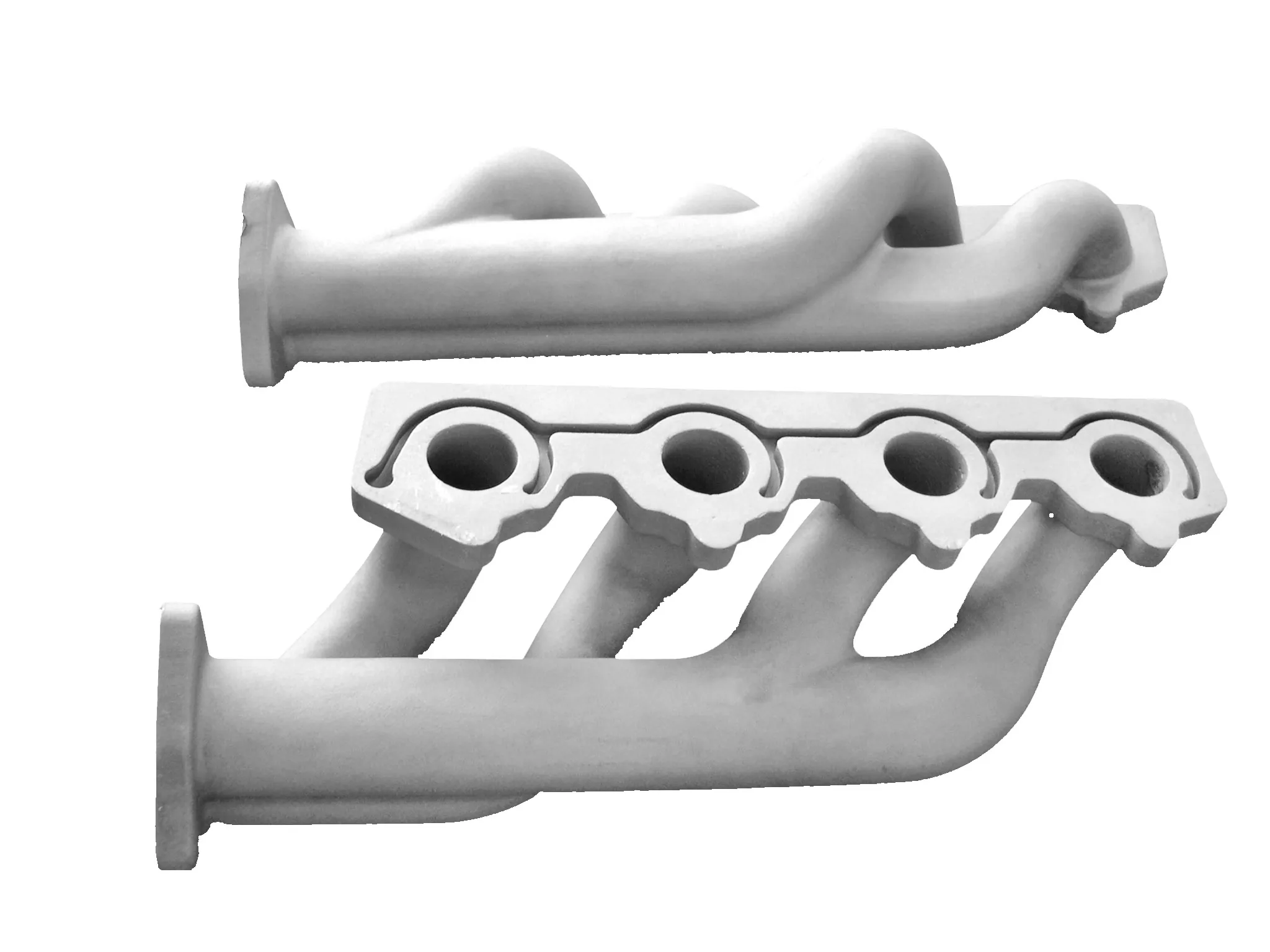
A sand 3D printer delivered to a Japanese foundry starts at the bottom of the price band seen at INTERMOLD Nagoya 2025 — roughly JPY 3 million for a compact entry system — and runs past JPY 20 million for a fully configured production platform; 3DPTEK’s J1800 sits in its mid-range band and arrives in Japan in 6–8 weeks, while ExOne and voxeljet platforms are quoted at multiples of that with 4–9 month lead times. The market timing is not an accident. Japan Metal Daily reports steel castings production fell roughly 13% in FY2024 and total castings output has declined three consecutive years, even as the EV transition pulls aluminium casting demand upward and the 75% of Japanese iron foundry operators with 30 employees or fewer need a way to quote small batches without waiting weeks on wooden patterns. This guide covers what the machines actually cost in yen, how delivery, duty and compliance work for the Japanese market, and which platform fits an automotive Tier supplier, a pump and valve shop, or a foundry betting on EV housings.

The Japanese foundry market in 2026
El Japan Foundry Engineering Society’s chairman put the industry’s size on the record in his 2023 statement: iron castings production of roughly 2.6 million tonnes, with non-ferrous castings around 1.0 million tonnes on the nine-month figures reported at the time. He also said what every foundry executive in Japan knows but rarely states in a public forum: this is an auto-dependent industry. That dependence now cuts both ways. Japan Metal Daily tracked steel castings production down about 13% in FY2024, and castings output has now fallen for three consecutive years — the longest contraction in a generation of operating data.
What matters for a buyer is not the headline tonnage but the mix underneath it. The EV shift trims demand for traditional iron work — engine blocks, transmission housings — while pulling aluminium castings upward: motor housings, battery cases, inverter housings, all of them redesigned every model cycle. The JFS chairman explicitly flagged growing aluminium casting demand from electrification as a structural change, not a cyclical one. Those aluminium parts are smaller-batch, more complex, and far more frequently revised than the iron castings they replace, which is precisely the work that dies on a 4–8 week pattern lead time.
The other structural fact is scale. About 75% of Japan’s iron foundry operators employ 30 people or fewer. A small shop cannot carry a pattern inventory the way an integrated caster can, and it feels every week of tooling lead time in lost quotes. A binder jetting machine that prints a mold in two days from a CAD file changes what a 30-person foundry can even bid on. If you are starting from zero on the technology, our Guía de compra de impresoras 3D de arena walks through the selection framework before you talk to any supplier.
What a sand 3D printer actually costs in Japan
If you walked INTERMOLD Nagoya in May 2025 (May 20–22), the price range on the show floor told the whole story: sand 3D printing systems were quoted from roughly JPY 3 million for compact entry machines up to JPY 20 million and beyond for fully configured production systems — 300万円 to 2,000万円, in the local numbers. That band is the honest planning envelope for the technology in Japan today. List prices rarely survive contact with configuration, binder supply agreements and automation add-ons, so treat any single published number with suspicion and price per order.

Within that envelope, 3DPTEK positions its line the same way everywhere: the J1800 sits in a mid-range, configuration-dependent band; the J2500 in a mid-to-large range; and the J4000Pro is a large-format platform in the seven-figure class — a different budget conversation entirely from the machines shown at INTERMOLD. We do not publish a fake-precise yen price, because the final number depends on configuration, freight, duty and the binder setup you already run. For Western platforms, Japanese buyers report public-market estimates of roughly 2–3× the J1800 for an ExOne S-Max Pro, and the voxeljet VX1000 carries the highest per-build-volume cost of the group — a published academic purchase record showed one delivered and installed at the equivalent of roughly €750,000. Our Guía completa de costes lays out the machine, consumables and per-mold breakdown that sits behind these bands.
Import cost is the part Japanese buyers most often underestimate when comparing quotes. On top of the machine price, budget for ocean freight and marine insurance, customs duty assessed on the machine’s HS classification at the port of entry, and Japan’s 10% consumption tax on the landed value. Duty on industrial machinery is generally low single digits, but it is HS-code-specific, so we confirm the exact figure in the quotation rather than quoting a round number. For a J1800 the total landed cost lands a few percent above the ex-works price — small next to the price gap between platforms, but it should be in the comparison from day one.
| Fabricante | Modelo | Volumen de construcción | Posicionamiento de precios | Delivery to Japan | Sistema de materiales |
|---|---|---|---|---|---|
| 3DPTEK | J1800 | 1.800 × 1.000 × 700 mm | Gama media, depende de la configuración | 6 a 8 semanas | Abrir |
| 3DPTEK | J2500 | 2.500 × 1.500 × 1.000 mm | Gama media-alta, en función de la configuración | 2 meses | Abrir |
| 3DPTEK | J4000Pro | 4.000 × 2.500 × 1.500 mm | Gran formato, clase de siete cifras | 2-3 meses | Abrir |
| ExOne (Desktop Metal) | S-Max Pro | 1800 × 1000 × 800 mm | Aproximadamente entre 2 y 3 veces el J1800 (estimaciones públicas) | 4 a 7 meses | Semicerrado |
| voxeljet | VX1000 | 1000 × 600 × 500 mm | El coste por volumen más elevado del grupo (estimaciones públicas) | 6 a 9 meses | Cerrado |
Three honest observations about that table. First, the voxeljet VX1000 is the smallest machine in it (1,000 × 600 × 500 mm) yet carries the highest per-build-volume cost — proven, well-documented hardware, but you pay a premium for the installed base and the process records. Second, ExOne’s S-Max Pro is a genuinely mature machine whose price premium buys proven software and process documentation, not more build volume than the J1800. Third, the 3DPTEK J1800 sits in the same build-volume class as the S-Max Pro with an open material system that changes your five-year cost more than the purchase price does. Our Análisis de la relación coste-beneficio entre las impresoras 3D occidentales y las chinas breaks down where that difference actually comes from, line by line.
The 3DPTEK lineup for Japanese foundries
3DPTEK builds three binder jetting platforms plus SLS platforms for precision cores, and for a Japanese foundry the decision is usually between the J1800 and the J2500. The Chubu region around Nagoya and Toyota City accounts for 60%+ of Japan’s automotive casting output, and the part mix there — engine-related housings, transmission components, brackets, pump and valve bodies — maps cleanly onto these two machines.
El J1800 (1,800 × 1,000 × 700 mm) is the entry platform covering pump bodies, valve housings, impellers, gear cases and small-to-medium engine components. It is the machine a small jobbing foundry can justify on pattern cost alone: a machined pattern for a complex core that runs ¥300,000–¥1,500,000 or more, with a 4–8 week lead time, disappears entirely. It sits in 3DPTEK’s mid-range price band — a planning figure, not a quote.
El J2500 (2,500 × 1,500 × 1,000 mm) is the workhorse for automotive Tier suppliers and larger jobbing foundries. It handles engine blocks, transmission cases, large valve bodies and structural castings up to about 2.5 metres. This is the model we recommend first to most Japanese buyers, because it covers the majority of the parts a Tier supplier gets asked to quote — typically at a fraction of the cost of an equivalent Western-brand platform in the same size class, and it reaches Japan in about two months.
El J4000Pro (4,000 × 2,500 × 1,500 mm) exists for parts over 2.5 metres that must be cast as a single piece — energy equipment, marine components, large industrial machinery. In this class the realistic alternatives in Japan are a used Western machine or a very long wait; the J4000Pro is one of the few new large-format systems a Japanese buyer can get in under three months. For the full specification comparison across the line, see our Página de la gama de impresoras 3D de arena.
Alongside the binder jetting line, 3DPTEK’s SLS platforms cover the precision-core side of the shop: cores with internal cooling passages too fine to print in sand, and sacrificial patterns for investment casting. Japanese foundries that run both sand and investment processes — common in the valve and precision-casting sector — use the SLS machines to keep the whole patternless workflow in-house.
Delivery, compliance and installation in Japan
Timing is where the price gap compounds. A Japanese foundry that orders an ExOne or voxeljet machine today is looking at four to nine months before the crate arrives — before installation. 3DPTEK ships to Japanese ports in 6–8 weeks for the J1800, roughly two months for the J2500, and 2–3 months for the J4000Pro, with manufacturing, sea freight and customs clearance included. Installation engineers fly to your foundry for setup, operator training and process qualification, typically one to two weeks on site.
On compliance: 3DPTEK machines ship globally with CE documentation, including the declaration of conformity, and are built to international electrical safety standards. For the Japanese market the electrical hookup is 200 V three-phase — and because Japan runs a split 50/60 Hz grid (east and west), we confirm your site’s frequency at order so the machine is configured before it ships rather than discovering the mismatch after customs. Installation is performed to the requirements of the Industrial Safety and Health Act for industrial machinery; your plant engineer signs off the hookup, our engineer validates the machine. Note that PSE marking applies to household electrical appliances, not industrial production equipment, so a foundry machine does not carry it — ask your supplier to explain this if they try to make a compliance feature out of it.
Language support matters more than most buyers expect. 3DPTEK operates a Japanese-language news site at 3dptek.com/ja, and support documentation and training materials are available in Japanese. Remote diagnostics respond within 24 hours, and critical on-site issues are typically addressed within 48–72 hours with engineers flying from Beijing. Buyers in the region comparing us with European-market setup will find the same process described in our sand 3D printer guide for Europe.
Materials: the open-system question Japanese buyers should push on
Here is the question we get from every Japanese foundry that has been burned by a proprietary consumables contract: do I have to buy your sand and binder forever? For 3DPTEK the answer is no, and it is the single biggest TCO difference versus the Western platforms. Japanese foundries already run furan (furan no-bake) and phenolic binder processes for conventional core shooting, so the binder chemistry on the printer is the same chemistry you buy from your existing chemical supplier — not from us.
The open material system accepts any commercially available silica sand in the AFS 50–80 range, plus chromite sand for high-temperature sections and ceramic sand where surface finish demands it. Standard Japanese domestic foundry sands feed straight into the hopper without requalification gymnastics. Compare that with ExOne’s semi-closed system, certified on a narrower binder set, and voxeljet’s fully closed VX1000 with proprietary binder consumables. Over five years at two-shift operation, the open system typically saves a five-figure sum in consumables alone compared with proprietary binder pricing — often more than the discount you negotiate on the machine itself. Our Análisis comparativo de los sistemas de materiales abiertos y cerrados explica paso a paso todo el razonamiento matemático.
EV transition and the aluminium advantage
The EV transition is the strongest single argument for patternless casting in Japan right now. Motor housings and battery cases are the growth segments, and they share three properties that punish traditional tooling: they are aluminium, they carry complex internal cooling geometry, and they are redesigned every model cycle. A pattern for an EV motor housing costs real money and takes weeks; a printed mold is two days. Toyota and its supply chain are insourcing complex castings — pulling housing work back in-house — which means Tier suppliers must quote fast, patternless jobs to hold the work at all.
Aluminium also happens to be the friendliest alloy family for printed sand molds: lower pouring temperature than iron means the printed mold holds up across pours, and the iteration loop is short — print a modified housing mold in two days, cast it the same week, measure, revise. That loop is the entire competitive game in EV development, where a motor redesign lands and the foundry that casts the first housing wins the series. Our EV motor housing lightweighting case study walks through the part-level economics.
ROI for a Japanese foundry
Put real numbers on it, because Japanese pattern costs make the ROI math run fast. A machined pattern for a complex core runs ¥300,000–¥1,500,000 or more — the same €3,000–€15,000 range as European pattern work — with a 4–8 week lead time. On a J1800 or J2500 that spend goes to zero and new-part lead time drops to two or three days from CAD to mold. A mid-size foundry producing a few hundred pattern-dependent castings a year is spending seven figures of yen annually on tooling that a printer replaces in the first year.
On total cost of ownership, the five-year picture for a 3DPTEK J1800 or J2500 — purchase price, open-system consumables, delivery — is roughly half that of the equivalent Western platform, and the sand reclamation loop (95%+ of the sand returns to service) keeps the consumables bill flat. Add rush-order premiums: Japanese OEMs pay premiums for rapid casting like OEMs everywhere, only higher, and the ability to quote a two-day mold wins those orders outright. Our Guía sobre el retorno de la inversión de las impresoras 3D de arena gives the full model to run against your own part mix.
How Japanese foundries are using it
Adoption in Japan is further along than most buyers assume. The industry survey run at INTERMOLD Nagoya 2025 found roughly 40% of large Japanese foundries already use 3D-printed sand molds in prototyping. The same reporting put the speed gain in stark terms: a wooden pattern that takes two weeks versus a 3D-printed mold in two days — about ten times faster to first pour. Prototyping is where every Japanese adopter starts, and small-batch production follows naturally: short-run parts, replacement castings, and legacy components whose original patterns no longer exist.
That last category matters more in Japan than anywhere else. Mold makers are retiring, and with them the wooden patterns and core boxes that were never digitized. When a pattern is gone, the part is effectively unquoted-able — unless you can print the mold from the customer’s drawing in two days. Patternless casting converts that dead inventory into live business, and it compresses the skill problem: the pattern maker’s craft moves into CAD and print parameters instead of 20 years of apprenticeship. Our article on training mold makers for digital casting covers the workforce transition side. The same pattern is visible across the region — our Korea market guide documents the parallel shift there.
Financing and support for Japanese buyers
Japanese buyers have capital routes that make the machine decision easier than the sticker suggests. METI’s Monozukuri (ものづくり) subsidy programme for SME manufacturing investment, and regional manufacturing-support schemes in Aichi, Tokyo and other prefectures, have funded equipment purchases for small foundries; whether a sand 3D printer qualifies depends on the fiscal-year call for applications, which typically favour automation and digitalisation investments by SMEs. It is worth checking each call, because the paperwork cost is low and the grants have covered meaningful shares of comparable machine investments. The equipment also qualifies for the same industrial-asset depreciation treatment as any other casting machinery.
If you prefer not to tie up capital, 3DPTEK offers phased payments for Japanese buyers — typically 30% at order, 40% at factory acceptance test, 30% at installation — and leasing arrangements through partner financial institutions. The practical effect is that a J1800 can be in production for a monthly cost in the same range as the pattern spend it eliminates, with the first castings offsetting the lease from month one.

Written by the 3DPTEK engineering team — the same team that operates our own foundries and sand 3D printers in daily production. Acerca de 3DPTEK.
Preguntas frecuentes
How much does a sand 3D printer cost in Japan?
The planning envelope in Japan, from the systems shown at INTERMOLD Nagoya 2025, runs from roughly JPY 3 million for compact entry machines to JPY 20 million and up for fully configured production systems. Within that band, 3DPTEK’s J1800 sits in a mid-range, configuration-dependent band, the J2500 in a mid-to-large range, and the J4000Pro is a large-format platform in the seven-figure class. Western-brand equivalents are reported by Japanese buyers at roughly 2–3× the J1800 for comparable build volumes. Contact 3DPTEK for a firm quotation in yen, including freight, duty and consumption tax.
Which sand 3D printers are available in Japan?
The practical options for a Japanese foundry are the 3DPTEK J1800, J2500 and J4000Pro (binder jetting, open material systems) plus 3DPTEK SLS platforms, the ExOne S-Max Pro, and the voxeljet VX1000 series. 3DPTEK machines accept standard Japanese foundry sands and standard furan/phenolic binders, so they integrate with your existing material supply chain instead of locking you into proprietary consumables.
How long does delivery to Japan take?
3DPTEK delivers to Japanese ports in 6–8 weeks for the J1800, about two months for the J2500, and 2–3 months for the J4000Pro, including manufacturing, sea freight and customs clearance. Installation and operator training take 1–2 weeks on site. ExOne and voxeljet lead times are typically 4–9 months.
Are 3DPTEK machines compliant for the Japanese market?
Yes. 3DPTEK machines ship globally with CE documentation including the declaration of conformity, and are built to international electrical safety standards. For Japan, the electrical configuration is 200 V three-phase with your site’s 50 or 60 Hz frequency confirmed at order, and installation is performed to Industrial Safety and Health Act requirements. PSE marking applies to household appliances, not industrial production machinery.
Can I use Japanese foundry sand in a 3DPTEK sand 3D printer?
Yes. The open material system accepts commercially available silica sand in the AFS 50–80 range, chromite sand and ceramic sand from any supplier. Standard domestic Japanese foundry sands have been validated on 3DPTEK machines, and you keep using your existing furan or phenolic binder from your current chemical supplier. No proprietary consumables contract.
How does 3DPTEK compare with ExOne and voxeljet for Japanese foundries?
3DPTEK offers the same binder jetting technology at significantly lower cost, with an open material system, 6–8 week delivery to Japan, CE documentation and Japanese-language support. ExOne and voxeljet have longer installed bases and proven process documentation, which matters for buyers who need brand continuity. For most Japanese foundries, the total five-year cost of a 3DPTEK J1800 or J2500, including consumables savings, is roughly half that of the equivalent Western platform.
Empezar
Whether you run a 30-person jobbing foundry in Osaka or a Tier supplier feeding the Toyota supply chain from Aichi, the machine economics work the same way: kill the pattern spend, cut the lead time, win the quote. Request a formal quotation with delivery to Yokohama, Nagoya or Kobe, the landed cost in yen, and a firm installation date — send us a part drawing and we will tell you which machine fits, what it costs delivered to your door, and how fast you can be casting without a pattern.


