
Bronze and brass castings, from a 2.5 m propeller to a wear bushing
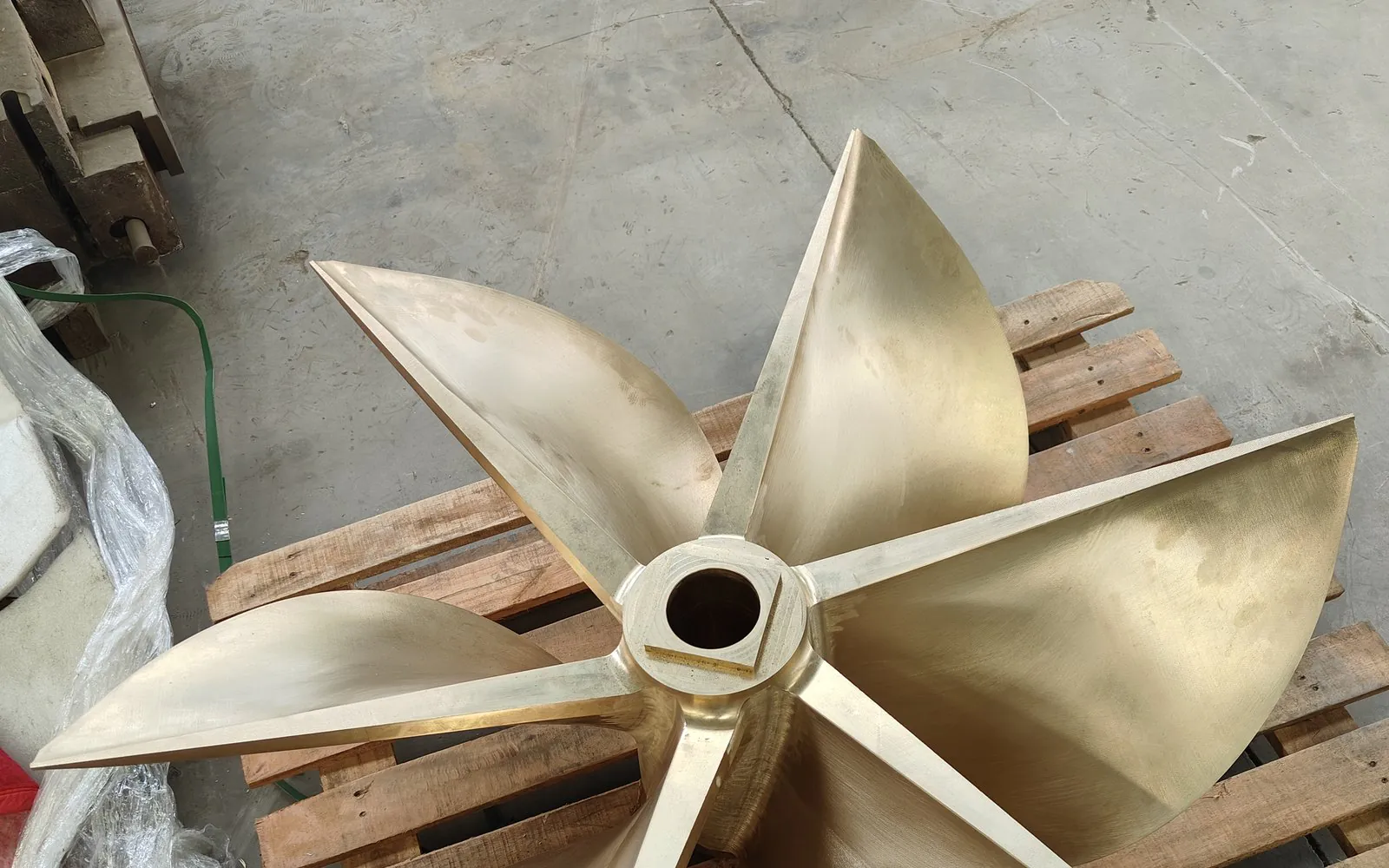
We cast the whole copper family by gravity into printed sand moulds, or by investment from a printed wax pattern. No pattern is made either way, which is what makes a one-off bronze part economic — and what makes a 2.5 m marine propeller a single printed casting rather than weeks of hand moulding.
Which copper alloy your part needs
"Bronze" is a family, not a material. Tin bronze is the bearing alloy, aluminium bronze is the one that survives seawater, silicon bronze is the one that pours and welds well, and manganese bronze and the brasses are the high-strength, lower-cost end of the same family. Choosing between them is a duty decision, and the wrong choice shows up as wear, corrosion or a casting defect rather than as a price difference.
Two things are worth knowing before you specify. First, copper alloys are the easiest of the structural metals on the mould — they pour around 1,200 °C, four hundred degrees below steel, so the sand, the binder and the mould coating are all working well inside their limits. Second, that is exactly why a printed mould suits them: the process window is wide, so a one-off part comes out as a sound part.
Send us the drawing and the duty — what it touches, what wears on it, what temperature it sees — and our application engineers will name the alloy. If you already have a callout, we will pour to it.
The copper alloys we pour
Six families cover almost every enquiry we see. The exact grade callout follows your drawing; where you have no callout we will propose one and tell you why.
Tin bronze
The classic bearing and worm-wheel alloy. Good load capacity, low friction against a steel shaft, and it retains its properties at moderate temperature.
Reach for it when the part slides or rotates against steel.
Aluminium bronze
The strongest of the family and the one that resists seawater and most acids. Harder to machine than tin bronze, but it holds up where nothing else does.
Reach for it when the duty is marine, offshore or chemical.
Silicon bronze
The best-behaved copper alloy in the foundry and in fabrication. Pours cleanly, welds well, and gives a good as-cast surface on intricate geometry.
Reach for it when the shape is complex or the part will be welded.
Manganese bronze
A high-strength, high-tensile member of the family, used where load matters more than corrosion resistance.
Reach for it when you need strength and the medium is benign.
Brass
Copper and zinc. Cheaper than bronze and very machinable, and the right answer for a great many fittings, housings and decorative parts.
Reach for it when cost and machinability govern and corrosion is manageable.
Wear bushings and plates
A product family rather than an alloy: bushes, sleeves, wear plates and bearing shells, cast to size in the bronze your duty calls for.
Reach for it when the part is a consumable wear item.
Bronze or brass? The difference that decides the part
The two words are used interchangeably in conversation and mean quite different things in a specification. Bronze is copper alloyed with tin, aluminium or silicon; brass is copper alloyed with zinc. That single difference sets the colour, the corrosion behaviour, the machinability and the price.
| Property | Bronze (copper + tin / Al / Si) | Brass (copper + zinc) |
|---|---|---|
| Strength | Higher, and holds it at temperature | Lower, drops off sooner |
| Corrosion, especially seawater | Excellent, aluminium bronze especially | Poor in chloride; dezincification risk |
| Wear and bearing duty | The bearing family | Not a bearing material |
| Machinability | Good, harder for aluminium bronze | Excellent, the easiest to machine |
| Castability | Good; silicon bronze best | Very good |
| Colour | Reddish-brown to golden | Yellow to gold |
| Cost | Higher — tin and aluminium cost more than zinc | Nach unten |
| Pick it when | The part wears, rotates, or meets seawater | The part is a fitting, housing or decorative item |
The short version: if it moves against something or meets salt water, it is bronze. If it is a fitting, a housing or a decorative part in a dry environment, brass will do the same job for less.
Why copper is the easiest alloy on the mould
A sand mould is a refractory material, and every metal has a pouring temperature that decides how hard it is on that material. Copper alloys sit in the comfortable middle of the range — hotter than aluminium, far cooler than iron or steel — and that changes the sand specification in a way that is easy to get backwards.
| Metall | Pouring temperature | Sand SiO₂ needed | Ordner |
|---|---|---|---|
| Cast steel | Above 1,500 °C | Above 96% on large parts | Phenolic |
| Gusseisen | About 100 °C below steel | 80–90% | Furan |
| Kupferlegierungen | About 1,200 °C | 70–80% is sufficient | Furan |
| Aluminium alloys | About 700 °C | Not a governing factor | Furan |
Here is the part that runs against intuition. Using a higher-silica sand for copper would be worse, not better. Silica expands and changes phase sharply as it heats, and sand that is richer in it expands harder — which cracks the mould face and produces sand inclusion, slag entrapment and distortion cracks in the casting. For copper you deliberately specify a lower-silica sand, and you keep the clay content under 0.2% so the binder can do its job.
A printed mould lets us set that specification per job rather than per foundry default. That is the whole advantage: the sand, the binder and the coating are chosen for your alloy and your wall thickness, and the part is poured once with the right recipe instead of being re-poured after a defect.
Gravity casting or investment casting
Copper alloys run on two routes here, and the choice is about geometry and surface rather than about the alloy.
Gravity casting into a printed sand mould is the route for anything with an internal cavity, an integral passage, a flange or a bore — pump bodies, valve bodies, housings, brackets, propellers. Sand cores printed as part of the mould give you the internal geometry, and the mould is collapsible enough to let a bronze part contract without tearing itself apart. Walls from about 4 mm up, and finished weights into the hundreds of kilograms.
Investment casting from a printed wax pattern is the route for thin-walled, fine-detail work where the part should come out close to net shape — impellers, small precision components, art and sculpture with surface detail a sand mould cannot hold. The wax pattern is printed rather than injection-moulded, so there is no tooling.
Both routes are available on the same enquiry, and we will tell you which one we would use rather than leaving you to guess.
A 2.5 m bronze propeller, without hand moulding
Marine propellers are the traditional argument for bronze, and the traditional way to make one is hand moulding: a pattern, a pit, a great deal of skilled labour and a working environment nobody enjoys. This one was printed instead — the sand mould and the blade cores came off a 2.5 m-class binder-jetting sand printer, and the foundry poured it as a single copper alloy casting.

Printed mould and blade coresOne setup, no pattern 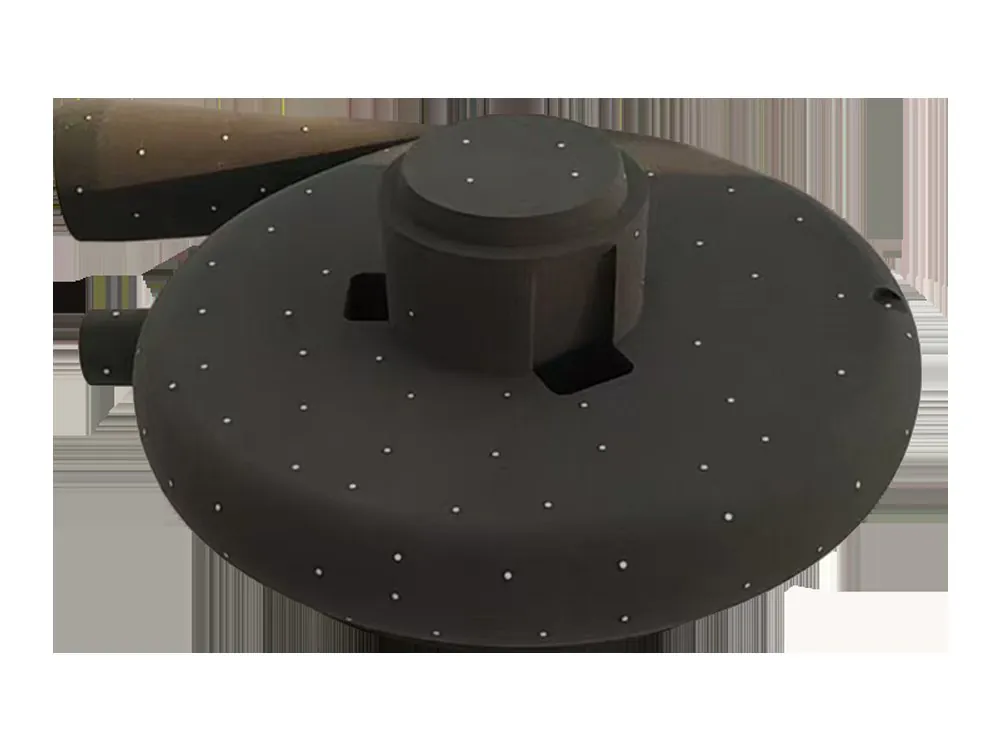
Printed mould for a volute casingSand route, cores included 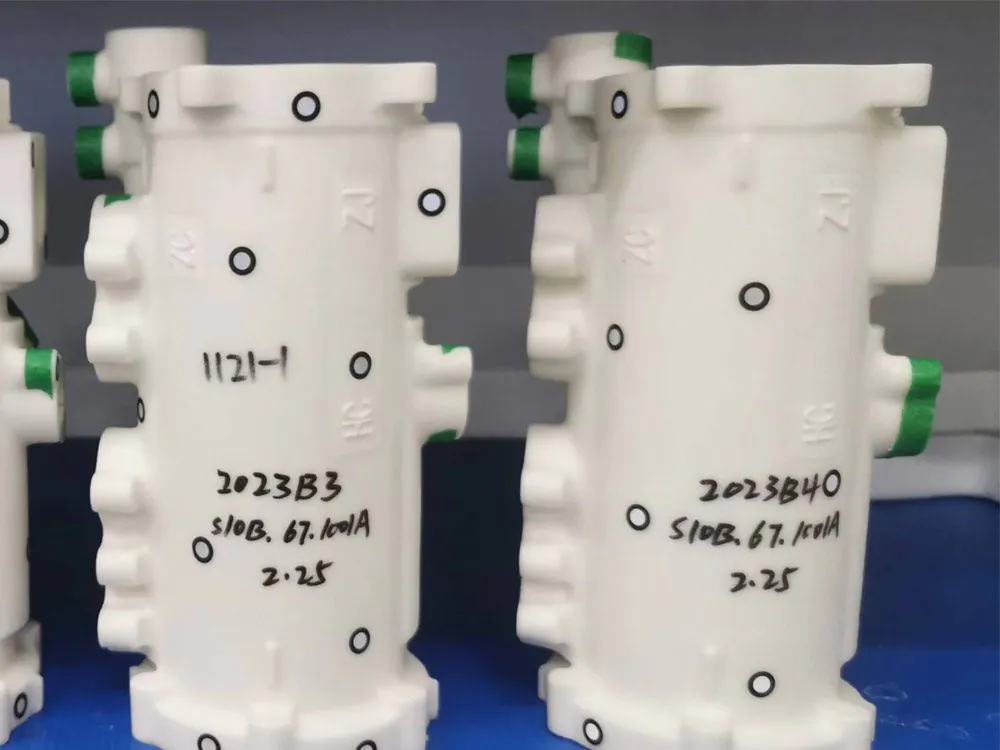
Printed wax patternsInvestment route, no tooling
The result was a faster build than the hand-moulded route, a better and more consistent casting, a cleaner working environment and far less manual labour. The same argument holds at the other end of the size range — a wear bushing or a valve body that used to need a pattern now does not, so a one-off replacement part is a normal order rather than an expensive exception.
The moulds are printed on our own machines, including the 3DPTEK-J1800 for moulds and cores up to about a metre and the 3DPTEK-J4000 for the large work. See the full sand printer range.
Defects copper alloys are prone to
Copper alloys are forgiving on the mould and unforgiving on gas. They dissolve hydrogen readily, they form stubborn oxide films, and several of the useful grades segregate as they freeze. These six are the ones that decide whether your casting passes.
Hydrogen and steam porosity
Copper alloys absorb hydrogen from any moisture in the charge, the mould or the atmosphere, and reject it as the metal freezes — leaving porosity concentrated in the last metal to solidify. Melt degassing, dry moulds and a dry charge are the controls.
Dross and oxide entrapment
Aluminium bronze forms a tough, tenacious oxide film that does not float out easily. Stirred into the cavity it becomes a hard inclusion that surfaces at machining. A quiescent pouring basin and a properly sized runner keep the first metal clean.
Shrinkage porosity
Copper alloys contract noticeably on solidifying and, like steel, have no graphite expansion to help feed it. Heavy sections need properly sized risers, and thick-to-thin transitions need chills or they will pull a void.
Tin sweat in high-tin bronze
In high-tin grades the tin-rich liquid is squeezed out of the freezing solid and exudes onto the surface as beads — the defect has its own name because it is that common. Controlled cooling and a carbon equivalent chosen for the section prevent it.
Lead segregation in bearing bronzes
Leaded tin bronzes rely on distributed lead for their bearing behaviour, but lead separates readily. Pour it too hot or cool it too slowly and the lead pools instead of dispersing, and the bearing surface fails unevenly.
Hot tearing in the high-strength grades
Manganese bronze and the high-tensile brasses are strong at temperature and can crack as they contract against a mould that restrains them. A collapsible printed mould helps; the rigging still has to let the part move.
The bronze foundry behind these castings
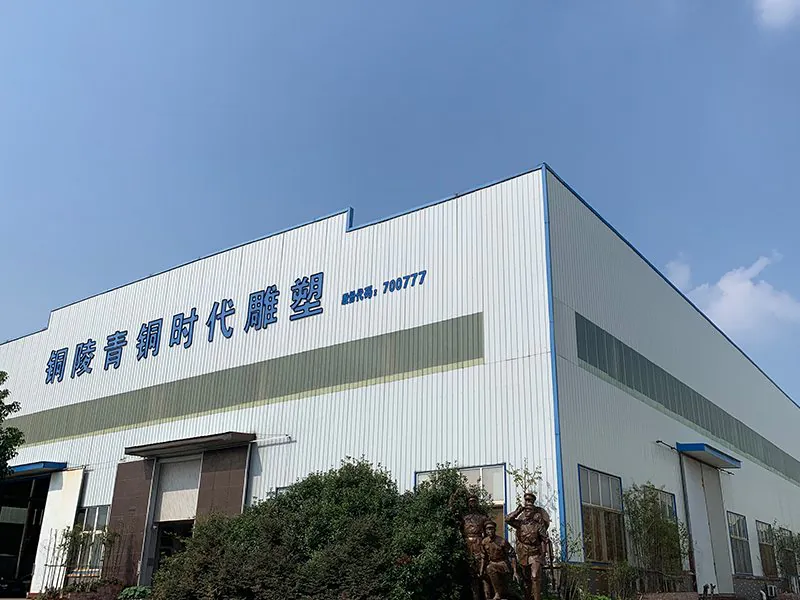
Copper is poured at two of our own plants: the industrial bronze and brass foundry line at Shaanxi Xianyang, and the art foundry at Tongling in Anhui. Both melt, cast, finish and inspect in house, and the records ship with the casting.
- Melting and composition. Medium-frequency induction melting, with a spectrograph sample taken from every heat before it is poured. Copper alloys are the best-behaved metals we pour — no magnesium treatment, no narrow carbon window — so the target composition is hit more easily than in iron or steel. It is still checked on every heat.
- Moulds and cores from our own printers. The printed sand mould, or the printed wax pattern for the investment route, comes off machines on the same site. That is what removed hand moulding from the propeller case above.
- Finishing and machining on site. Fettling, heat treatment where a grade calls for it, CNC machining from 3-axis to 5-axis, and the patina and finishing work for sculpture — all in the same chain as the pour.
- Testing and records. Composition per heat, tensile and hardness testing, dimensional inspection on a coordinate measuring machine, and pressure testing for pump and valve work. The heat number stays with the casting and the records are exported with it.
- Maßstab. The Tongling art foundry holds 500 t a year of bronze sculpture capacity, and was the first in China to use 3D-printed investment casting for sculpture. Industrial bronze and brass work runs on the same printed-mould chain, to 2 t per pour.
Copper alloy castings we have poured
Bodies, bushings, impellers and wear parts, in the alloy the duty called for. Because the mould or the wax pattern is printed, a different part every week costs nothing extra.
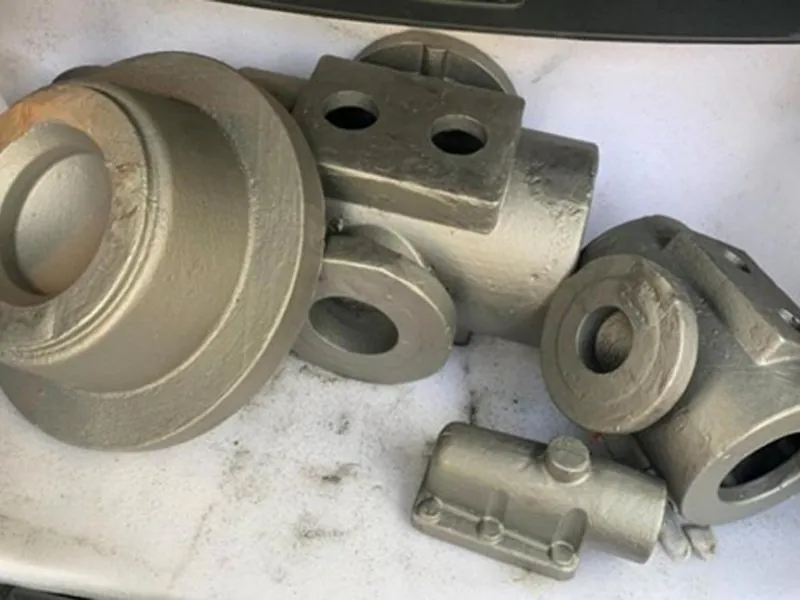
Pump bodiesCast bronze, gravity route 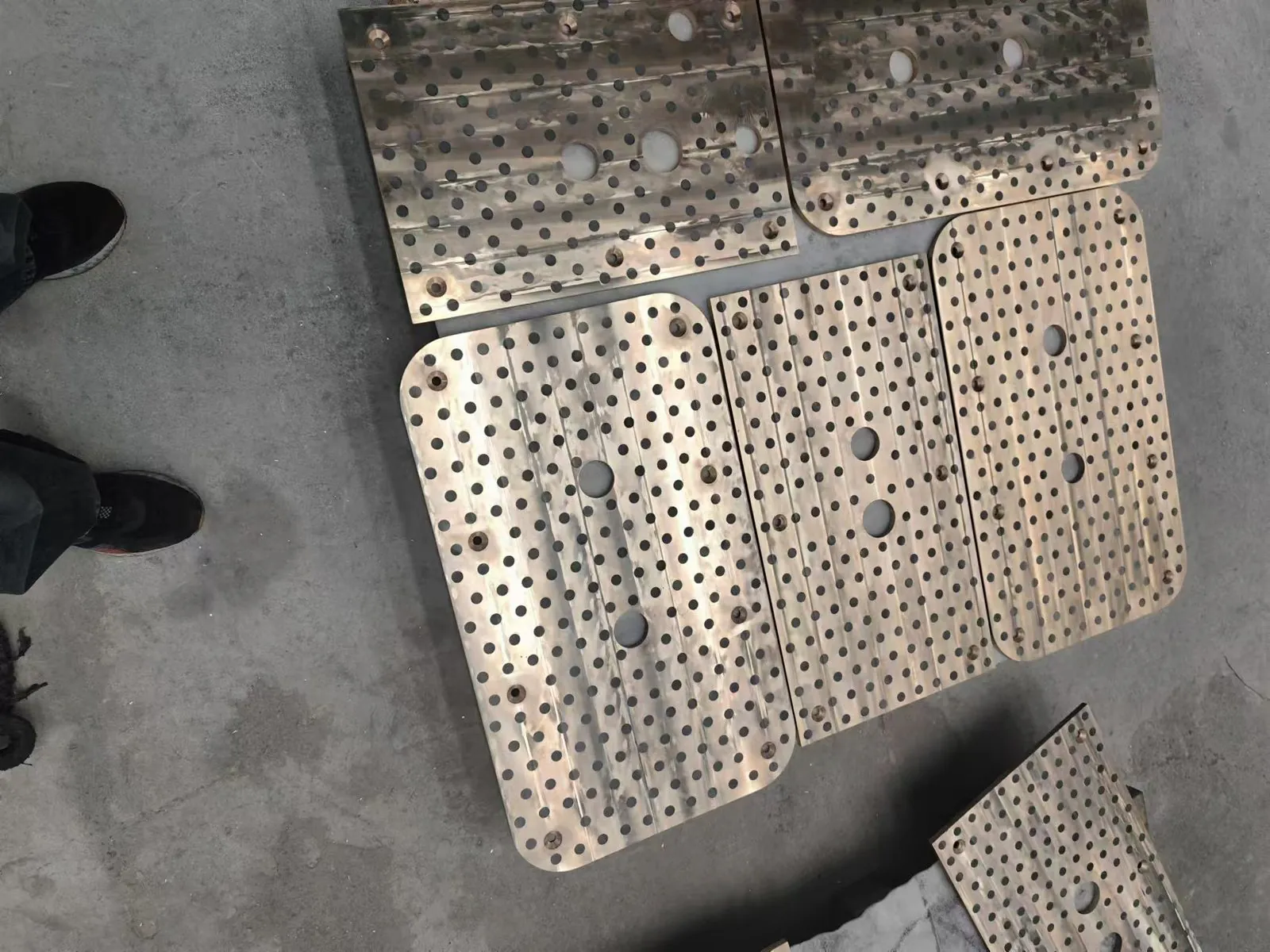
Copper alloy wear plateCast to size, no pattern 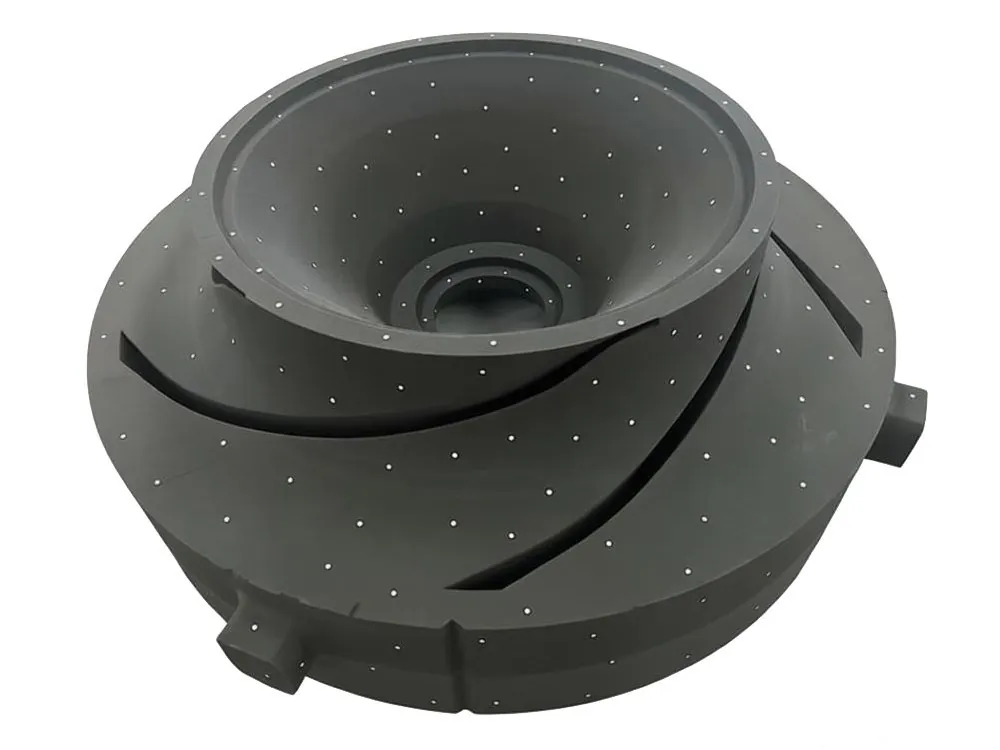
Closed impellerInvestment route 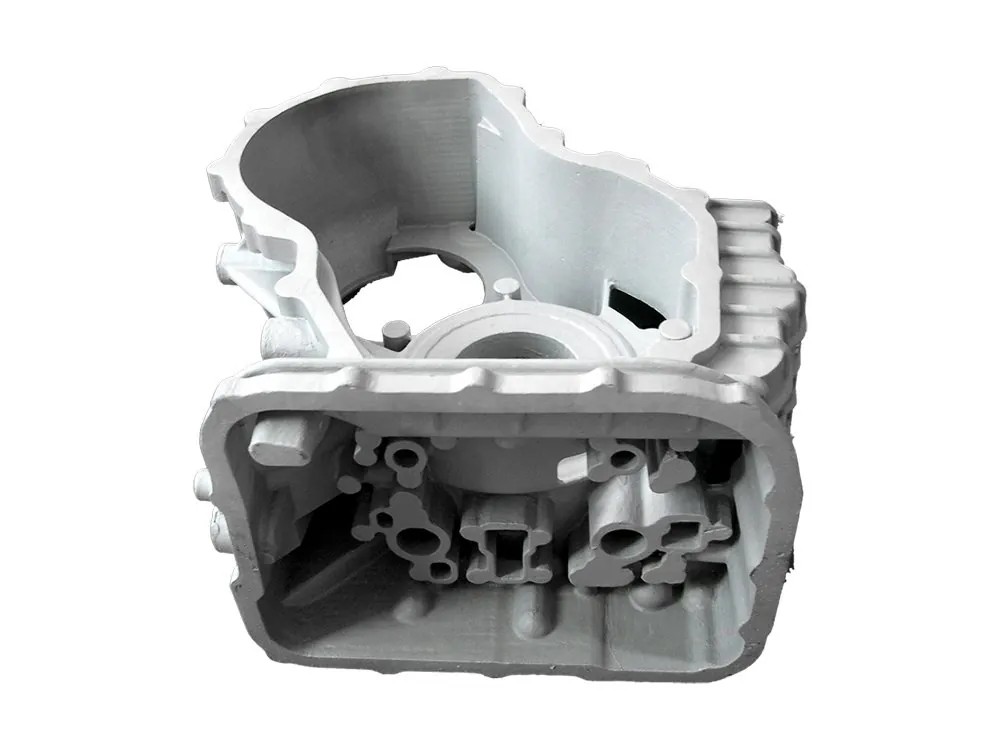
Finished castingFrom a printed wax pattern 
Silicon bronze castingAs-cast, printed mould 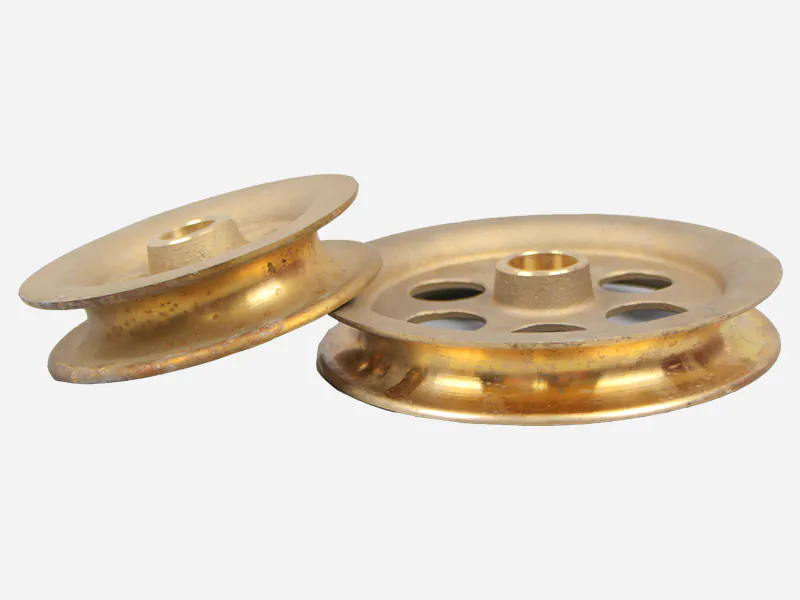
Copper alloy castingsMixed production run
Art and sculpture bronze
Bronze has been the sculptor's metal for three thousand years, and it is still cast the old way in most of the world: a rubber mould, a wax copy, a ceramic shell, a great deal of hand work. We run an art foundry in Tongling that was the first in China to put 3D-printed investment casting into sculpture production, with a bronze sculpture capacity of 500 t a year.
Monumental bronze groupCast from printed wax 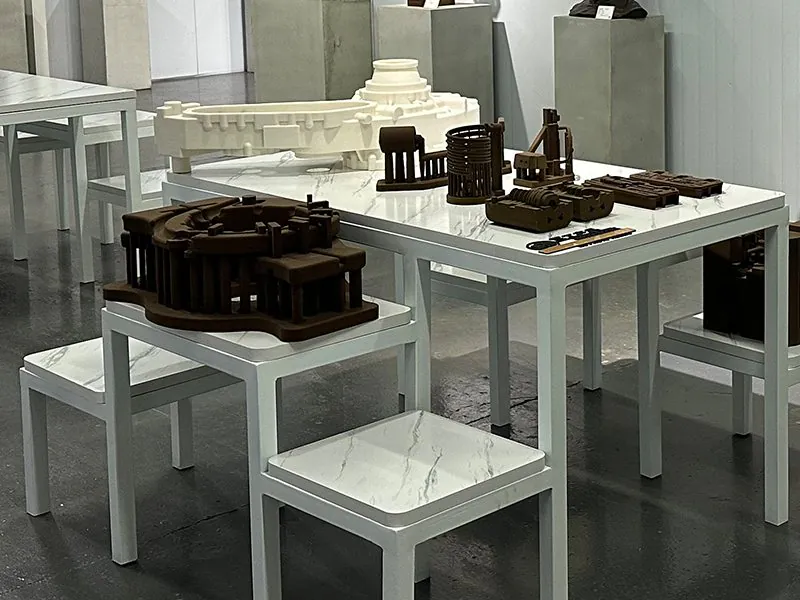
Art castings in the showroomInvestment and plaster mould 
Silicon bronze art castingPatinated after casting
The art foundry runs investment casting, resin-bonded sand casting and plaster-mould integral casting, so a piece can be scaled, sectioned and assembled without a physical maquette being cut apart. For an artist or an architect that means a large work can be printed and cast in sections that fit the foundry rather than being limited by it.
If you are commissioning a sculpture rather than a component, say so in your enquiry and it will be routed to the art foundry with the rest of the bronze work.
What we do not do
Copper alloys are one of the things we are genuinely good at, which makes it more important to be precise about the edges.
We do not roll, draw or extrude copper
We are a casting route. Bar, plate, tube and wire are different supply chains and we do not quote them. If your part is better machined from stock, that is what we will tell you.
We do not die cast copper alloys
High-pressure die casting is a different process with a different cost curve, and copper alloys are rarely die cast. We do not run it, and we will not quote a part as if sand casting and die casting were interchangeable.
We are not the cheapest at high annual volume
A printed mould is economic because there is no pattern. Once a pattern or die pays back over many thousands of parts a year, a conventional foundry will beat us on piece price. Our advantage is the first part, not the ten-thousandth.
We do not do restoration or repair casting
We can cast a new sculpture or component from a model or a scan, but we do not weld, patch or restore an existing antique bronze. That is a specialist conservation trade and we are not in it.
Choosing the right route for your part
If a copper alloy is not the answer, one of these is. Each runs the same printed-mould or printed-pattern chain, so switching route does not cost you the lead time you were trying to save.
- Precision investment casting
The wax route, for thin walls and fine detail — including the art work above.
- Aluminium casting
Lighter and cheaper per kilogram, where corrosion and wear are not the governing duty.
- Stainless steel casting
When the duty is corrosion but the strength requirement rules copper out.
- Sand mould and core printing
When you need the printed mould or core itself as a product, not the casting.
- Materials guide
To check the alloy against the rest of the range.
- Bronze vs brass, compared
What actually separates the two families: dezincification, bearing duty and cost.
- Cast steel casting
When the duty needs strength and corrosion resistance that copper cannot carry.
- Ductile iron casting
The cheaper ferrous option for housings and structural parts.
Not sure which one? Send the drawing and the duty, and let our application engineers make the call. We print the part before you commit to tooling, so the route is tested rather than argued.
Bronze and brass casting questions
What is the difference between bronze and brass?
Bronze is copper alloyed with tin, aluminium or silicon. Brass is copper alloyed with zinc. Bronze is stronger, resists seawater and is the bearing family; brass is cheaper, machines more easily and suits fittings, housings and decorative parts in dry service.
Which bronze should I specify?
Tin bronze for bearings and sliding wear, aluminium bronze for seawater and chemical duty, silicon bronze when the shape is complex or the part will be welded, manganese bronze where strength matters more than corrosion. Send the duty and we will name the alloy.
Can you cast bronze without a pattern?
Yes — that is the point of the service. The sand mould and its cores are printed from your CAD file on the gravity route, and the wax pattern itself is printed on the investment route. No pattern is made either way, so there is nothing to amortise.
What is the largest bronze casting you can make?
2 t for a single pour, in an envelope up to 3 m on the largest dimension. The marine propeller on this page is a 2.5 m class casting. Copper alloy capacity runs at 2,000 t a year, which is the largest of any material we cast.
How long does a bronze casting take?
The mould-making cycle runs about 70% shorter than the traditional route because there is no pattern, and the investment route avoids a pattern die as well. What is left is melting, pouring, finishing and any machining — the steps any foundry runs.
Is bronze harder to cast than aluminium?
It pours about 500 °C hotter, so the mould is worked harder, but it is still far easier than iron or steel. Copper alloys are the middle of the range: comfortable on the sand, and demanding mainly on gas control in the melt.
Can you cast large sculptures?
Yes. Our Tongling art foundry was the first in China to use 3D-printed investment casting for sculpture, with 500 t a year of bronze sculpture capacity. Large works are printed and cast in sections sized to the foundry rather than to a physical maquette.
Do you machine and finish the castings?
Yes, in the same chain. CNC machining from 3-axis to 5-axis, shot blasting, and the patination or coating the drawing calls for. Machining runs after stress relief so the finished dimensions hold.
Can you match an existing patina?
Within reason, and it is best discussed with the art foundry rather than a component enquiry. Send a photograph of the finish you want alongside the drawing and we will tell you honestly how close we can get and by what route.
Is there a minimum order quantity?
One piece. There is no pattern cost to spread across a batch, so a single replacement bushing or a one-off sculpture section is a legitimate order.
Send a drawing and we will name the alloy
Send the CAD file, the duty the part actually sees, and the annual quantity. Our application engineers will come back with the alloy, the route, the finishing and a price — and if copper is the wrong family for your part, that is what we will tell you.
Your file stays confidential. Nothing is subcontracted: the mould or the wax pattern is printed, the copper alloy is poured, and the casting is finished, machined and inspected in the same chain.