
Small Batch Casting Procurement: How to Buy 5 to 500 Cast Parts

Buying five castings is not a scaled-down version of buying five thousand. The economics invert, the questions change order, and the process that works at volume actively wastes money at low volume.
This is a procurement guide rather than a technical one. It covers the five steps from “we need some cast parts” to “the parts are on the dock,” the RFQ that gets you usable quotes, and the mistakes that cost the most.
The Direct Answer
The single biggest mistake in small batch casting procurement is asking for a unit price before establishing whether the order needs tooling at all.
Tooling is a fixed cost that has to be spread across the order. At five hundred parts it is a line item. At five parts it is the entire cost, and it is what makes a supplier quote something that looks unreasonable.
So the first question is not “what is your price per part.” It is “can you make this without tooling, and what does that do to the total?”
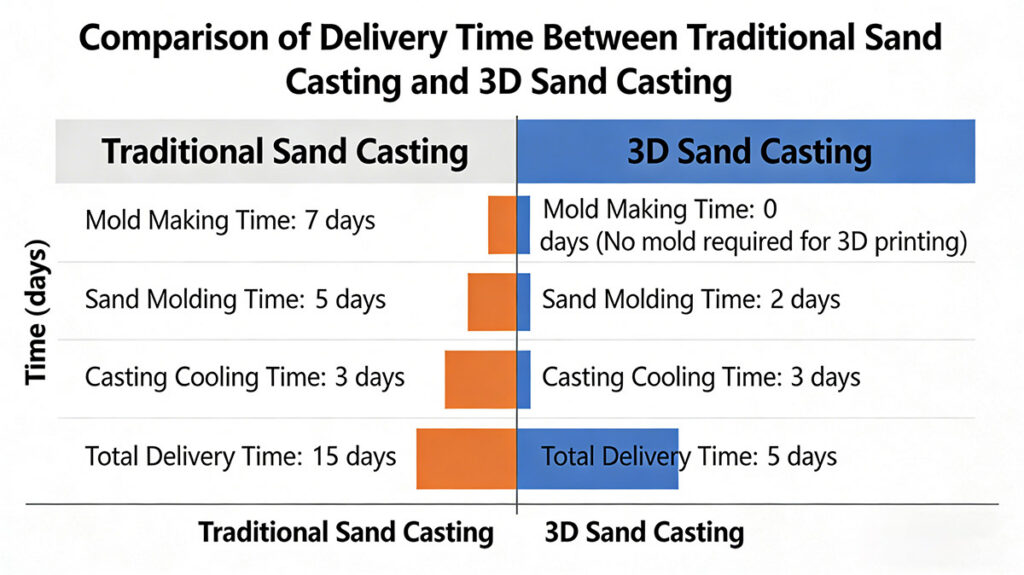
In sand casting the answer is often yes, because a 3D printed sand mold needs no pattern at all. That makes a one-off part genuinely viable, at a higher unit price and a much lower total spend.
Why Small Batch Procurement Is a Different Problem
The conventional procurement flow assumes a process that pays for itself at volume:
- Approve the design.
- Order tooling.
- Trial the tooling and approve the first article.
- Release production orders.
Every step assumes the tooling cost will be recovered. At five thousand parts it is. At fifty parts it may not be, and at five parts it certainly is not.
Three constraints define the small batch problem:
Tooling amortization. A die or a pattern has a fixed cost. Divide it by a small quantity and the unit price becomes meaningless as a comparison metric.
Minimum order quantities. Many foundries set an MOQ around their setup cost, not around your requirement.
The design is usually not frozen. In development, the part changes. Tooling bought for revision 2 is scrap at revision 3, and that cost lands on whoever paid for it, which is you.
The practical consequence is that the whole decision turns on one question, and it comes before pricing.
Step 1: Decide Whether You Need Tooling at All
Work through three dimensions before you talk to anyone.
| Dimension | Favors no tooling | Favors tooling |
|---|---|---|
| Количество | 1 to roughly 100 parts | Hundreds and up |
| Complexity | Deep pockets, internal cores, undercuts | Simple geometry that releases from a pattern |
| Design maturity | Still changing | Frozen and validated |
| Schedule | Weeks | Months are acceptable |
| Repeat demand | One-off or unknown | Known and recurring |
The crossover is arithmetic. Estimate the tooling cost, estimate the per-part saving the tooling would produce, and multiply. If tooling cost exceeds (per-part saving × quantity you realistically expect to order), do not buy tooling.
That word “realistically” is doing a lot of work. The most common procurement error we see is a business case built on launch volume that never materializes, with a die that is then amortized over a fifth of the parts it was justified by.
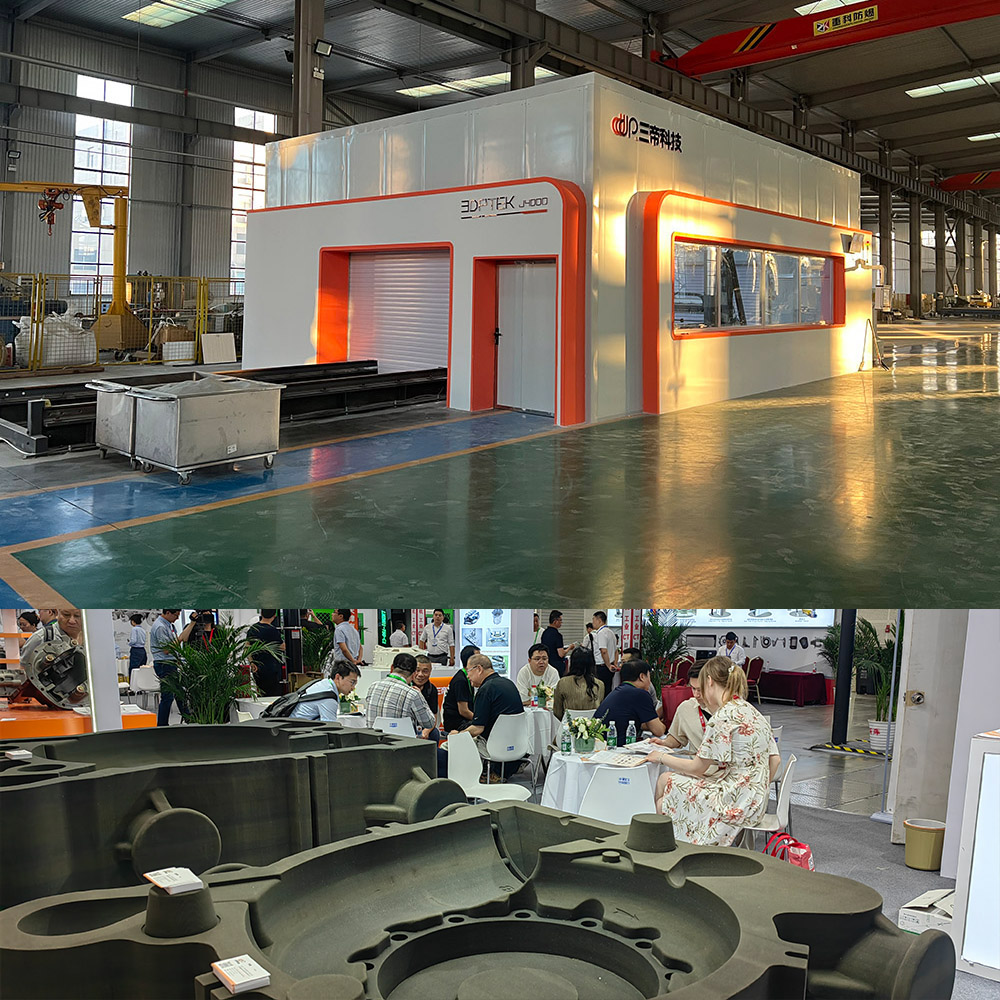
What patternless production changes. With printed sand molds, the pattern disappears entirely. Printed wax patterns do the same for investment casting. Both make the low-quantity end of the table viable, and both keep design revisions free until the design freezes. The trade is a higher unit cost at every quantity, which is why the crossover calculation still matters.
The process options and their tooling implications are set out in our sand casting process guide, and the cost arithmetic in more detail in sand 3D printing cost и patternless sand casting.
Step 2: Write an RFQ That Gets Comparable Quotes
Most quotes cannot be compared, because the RFQ did not specify enough for suppliers to quote the same scope. Two suppliers quoting “the same part” may be quoting different alloys, different inspection and different volumes.
Include all twelve of these.
| # | Пункт | Why it changes the price |
|---|---|---|
| 1 | 2D drawing and 3D model | The model drives the mold; the drawing drives inspection |
| 2 | Alloy, to a standard | Alloy cost and castability both move the price |
| 3 | Critical dimensions and tolerances | Determines whether the process route is even capable |
| 4 | Non-critical dimensions | Lets the supplier avoid over-inspecting |
| 5 | Surface finish requirement | Drives coating, finishing labor and possibly machining |
| 6 | Annual volume and first-order quantity | The single most important line in the RFQ |
| 7 | Required delivery date and any hard milestones | Determines whether tooling is feasible at all |
| 8 | Inspection and documentation scope | Dimensional report, material cert, NDT, FAI |
| 9 | Machining scope | Cast only, or cast and machined |
| 10 | Tooling ownership and transfer | Who owns the pattern or die, and can you move it |
| 11 | Packaging and shipping requirements | Rust prevention, custom crates, delivery terms |
| 12 | Change mechanism | How a revision is quoted and approved mid-order |
Item 6 is where most RFQs fail. Without an annual volume, a supplier cannot choose between a printed mold and a pattern, and will default to whichever is easier to quote rather than cheaper for you. State both the first order and the realistic annual requirement, and say plainly if the annual figure is uncertain.
A note on scope creep in the other direction. Some buyers send a drawing and a quantity and nothing else, then compare the resulting numbers. That comparison is not meaningful, and it usually resolves in favor of whichever supplier guessed the scope that was cheapest to make, not the one that best fits the requirement.
If you want a second opinion on a supplier’s response rather than on your own RFQ, our guide to choosing a sand casting service provider covers the evaluation criteria. This article covers the process you run before and after that evaluation.
Step 3: Understand What Actually Drives Per-Part Cost
Small batch castings cost more per part. That is normal, and understanding why makes the quotes easier to read.
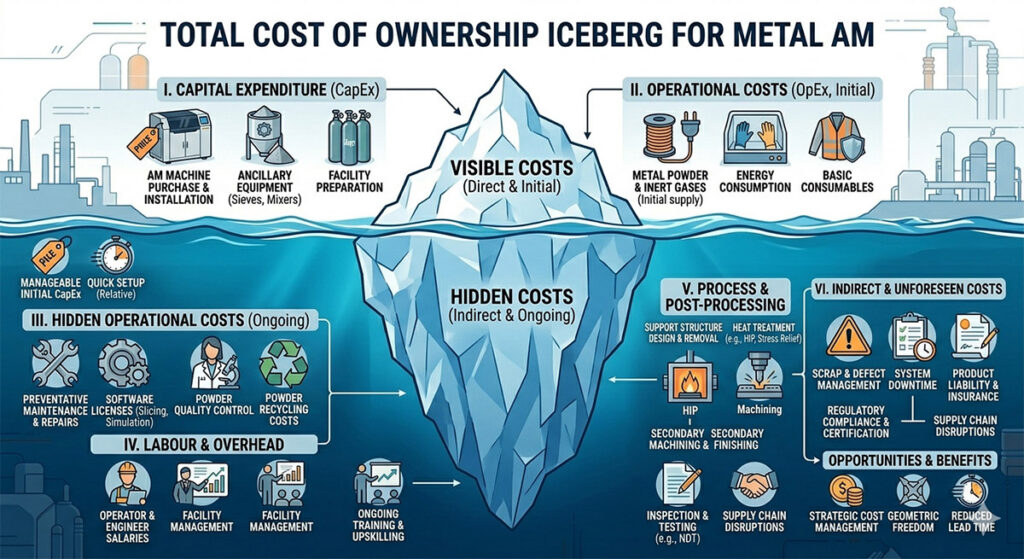
The cost components:
- Tooling amortization. Zero in the patternless route, and the dominant line in the conventional route at low volume.
- Molding and core making. Labor and material per mold. Printed molds move this from labor to machine time.
- Melting energy, which is largely fixed per heat regardless of how many parts are in it.
- Cleaning and finishing labor. The least predictable cost in the foundry, and the one that varies most between suppliers.
- Yield and scrap. Invisible in a quote and decisive in the actual cost.
- Inspection, which scales with the scope you specified rather than with the part.
- Logistics, including packaging and any rust prevention.
Two of these deserve emphasis for small batch work.
Melting is lumpy. A heat has a minimum size. If your order needs half a heat, you are paying for something close to a full heat. This is why a 5-part order and a 25-part order of the same small part can quote surprisingly close together.
Yield is where quotes diverge. A supplier with a 5% scrap rate and a supplier with a 15% scrap rate can quote the same part and deliver very different actual costs. You will not see yield on a quote, but you can ask for it, and a supplier with good process control will have the number.
Read the cost curve, not the number. Ask for pricing at three quantities, for example 5, 50 and 500. In the patternless route the three prices sit close together. In the conventional route the first price is high and the per-part price falls as tooling spreads. That shape tells you more than any single figure, and it is the fastest way to check whether a supplier has understood your volume.
For the buy-versus-outsource version of this question, sand 3D printer break-even works through the arithmetic.
Step 4: Run a Pilot Order Before You Commit
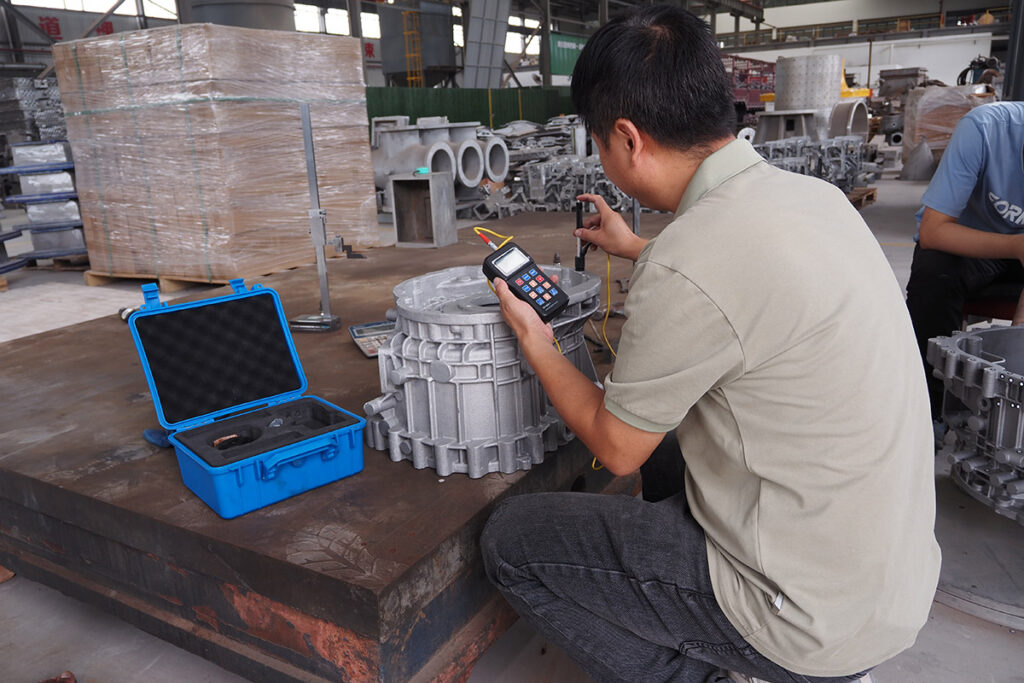
A pilot order does three things at once: it validates the supplier, it validates the process route, and it validates your own drawing. All three are worth finding out about on five parts rather than five hundred.
Agree what “passed” means before the pilot starts. A pilot with no acceptance criteria becomes an argument about opinion. Write down the dimensions you will measure, the method, and the pass limits, and send it with the pilot PO.
Ask for these documents with the pilot:
- First article inspection report against the drawing
- Dimensional report from a calibrated instrument, not calipers
- Material certificate traceable to a heat number
- Any non-destructive testing you specified
- A statement of the process route actually used, including whether a printed mold or a pattern was used
How many pilot parts? Enough to cover the range of the part: the tightest tolerance, the thinnest section, and the heaviest section. For most parts that is somewhere between 3 and 10. A single pilot part tells you whether the process can do it once, not whether it can do it repeatedly.
Watch for the right signals. A supplier that sends the FAI without being chased, that flags a marginal tolerance before you do, and that tells you which dimension was hardest to hold is a supplier worth scaling with. One that sends parts and an invoice is not.
Step 5: Scale Without Surprises
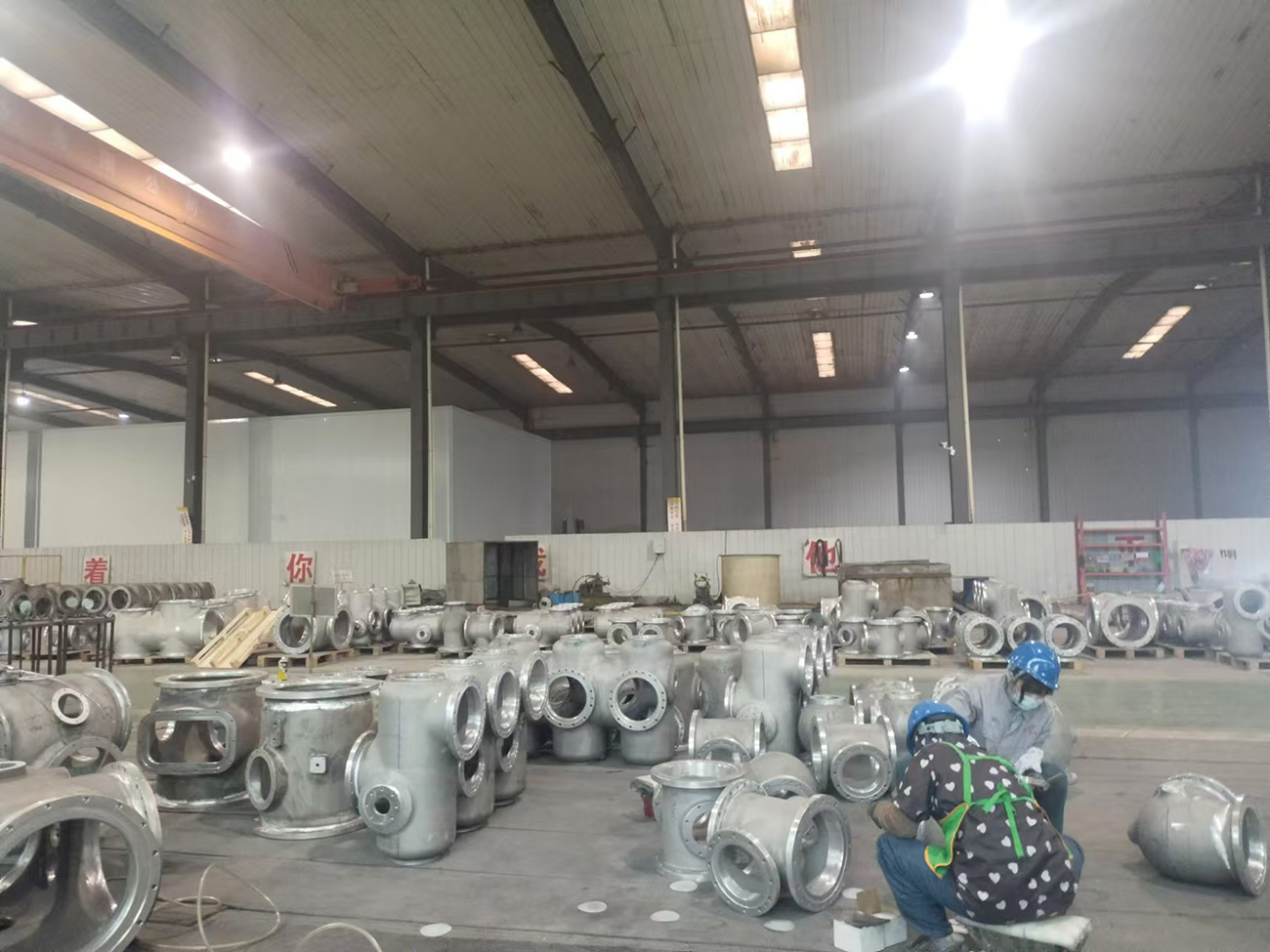
Moving from 5 parts to 500 changes more than the quantity.
The process route may need to change. A route that is right at 5 parts may be the expensive one at 500. Ask your supplier to re-quote and to tell you explicitly whether the route changes and when the change becomes worthwhile. A supplier that keeps quoting the same route at every quantity is not optimizing for you.
Inspection frequency usually changes. Full inspection on every part is normal at 5 and unaffordable at 500. Agree in advance what the sampling plan becomes, and what triggers a return to full inspection.
Lead time becomes a commitment rather than an estimate. At low volume you are fitting around the foundry’s schedule. At higher volume you should expect a scheduled slot, and you should ask what happens if you slip it.
Packaging needs to be settled. A handful of parts can go in a crate. Five hundred need a defined packaging spec, particularly if any surface is cosmetic or the parts are prone to rust.
Revisit the tooling decision. At some quantity, tooling starts to pay. Review that with your supplier when you re-quote rather than assuming the patternless route stays cheapest indefinitely.
Procurement Checklist: 20 Items
| Stage | Пункт |
|---|---|
| Specify | 1. 3D model and 2D drawing issued and revision-controlled |
| 2. Alloy specified to a recognized standard | |
| 3. Critical dimensions and tolerances marked on the drawing | |
| 4. Surface finish and cosmetic requirements stated | |
| 5. Machining scope decided | |
| Источник | 6. Annual and first-order volumes stated in the RFQ |
| 7. Delivery date and any hard milestones stated | |
| 8. Inspection and documentation scope stated | |
| 9. Tooling ownership and transfer terms confirmed | |
| 10. Quotes requested at three quantities for comparison | |
| Validate | 11. Pilot order placed with written acceptance criteria |
| 12. First article inspection report received and checked | |
| 13. Material certificate traceable to heat number | |
| 14. Process route confirmed in writing | |
| 15. Packaging spec agreed | |
| Release | 16. Production PO references the approved revision |
| 17. Sampling plan agreed for the production quantity | |
| 18. Lead time and slot confirmed, not assumed | |
| 19. Change mechanism agreed for mid-order revisions | |
| 20. Receipt inspection plan defined before the parts arrive |
Common Procurement Mistakes
| Mistake | What it costs |
|---|---|
| Comparing unit price without comparing scope | Choosing the cheaper quote that excluded machining or inspection |
| Not stating volume in the RFQ | The supplier picks a process that suits the quote, not your requirement |
| Vague tolerances | Either over-inspection and a higher price, or parts that fail at assembly |
| No first article inspection | Finding out about a systematic error after 500 parts |
| Assuming tooling is included | A surprise invoice, or a pattern the supplier owns and will not release |
| Treating a quote as a commitment | Lead times and prices that were never firm |
| Building the business case on launch volume | A die amortized over a fraction of the parts it was justified by |
| Not asking about yield | A price that looks competitive until the scrap rate is applied |
Часто задаваемые вопросы
What is the minimum order quantity for sand casting?
It depends entirely on the process route. The patternless route using 3D printed sand molds can produce a single part, because there is no pattern to amortize. The conventional route using a pattern usually needs tens of parts before the tooling becomes economic, and the exact threshold depends on the part and the pattern cost. Always ask a supplier to quote both routes at your quantity.
Is small batch casting more expensive per part?
Yes, and that is expected. The unit price is higher because fixed costs are spread across fewer parts. What matters is the total spend, which is often lower because you did not buy tooling at all. Ask for pricing at several quantities so you can see the shape of the curve rather than reacting to a single number.
How do I write an RFQ for cast parts?
Include twelve things: model and drawing, alloy to a standard, critical and non-critical dimensions, surface finish, annual and first-order volumes, delivery date, inspection scope, machining scope, tooling ownership, packaging, and the change mechanism. The volume line matters most, because without it a supplier cannot choose the process that is cheapest for you.
How long does a small batch casting order take?
It depends on whether tooling is involved. Without tooling, production starts from CAD and the schedule is dominated by printing, pouring and finishing. With conventional tooling, the tooling lead time usually exceeds the casting lead time for the first order, and the casting itself is fast on subsequent orders. Ask for the two lead times separately so you can see where the time goes.
Should I pay for tooling on a 5-part order?
Usually not. Compare the tooling cost against the per-part saving multiplied by the total quantity you realistically expect to order. For a genuine 5-part requirement, that calculation almost never favors tooling, and a supplier proposing it should be asked to quote the patternless route as well.
What quality documents should I expect?
A material certificate traceable to a heat number is standard. A dimensional report from a calibrated instrument should be agreed in the RFQ rather than assumed. A first article inspection report is worth requiring on any new part or new supplier. Any non-destructive testing has to be specified, because it is rarely offered by default.
Conclusion: Ask About Tooling Before You Ask About Price
Small batch casting procurement rewards a different sequence of questions.
- Start with the route, not the price. Ask whether tooling is needed before you ask what a part costs.
- Say your volume out loud. It is the input that determines whether a supplier can help you or only quote you.
- Buy three prices, not one. The shape of the cost curve tells you more than any single figure.
- Pilot before you commit. Five parts and an inspection report cost less than five hundred parts and a surprise.
If you have a small batch requirement and no idea which route fits, send us the drawing and the quantity. We will tell you which process makes sense at your volume, including when the answer is that conventional tooling is the better buy.
Get a quote and a route recommendation
Связанные статьи
- How to Choose a Sand Casting Service Provider
- Sand Casting Process Guide: Green Sand, Gating Systems and Patterns
- Patternless Sand Casting: Process, Cost and Lead Time
- 3D Sand Printing Cost: Full Breakdown for Foundries
- Окупаемость 3D-принтера на песке: эффективная таблица расчета рентабельности инвестиций
- Rapid Prototype Casting: From CAD to Casting in 5 Steps
- Rapid Casting Service: Patternless Production


