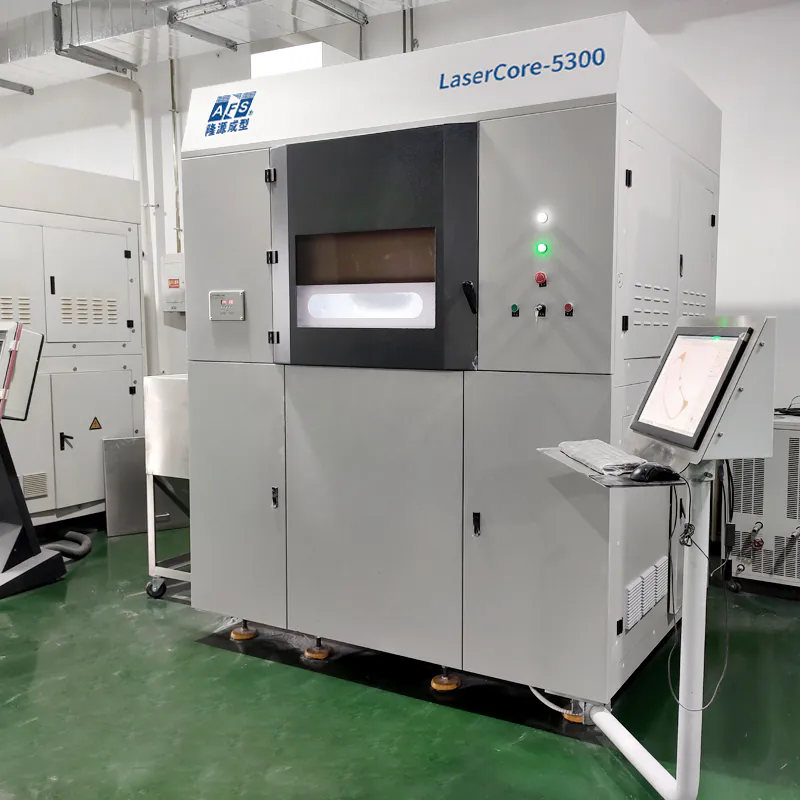
Investment Casting with 3D Printing: Wax Patterns, Tooling and Prototypes

Investment casting produces the finest surface finish and the tightest tolerances of any common casting process. It is also the process whose lead time is most often ruined by tooling: before you can pour a single part, someone has to cut a metal die to inject the wax patterns.
3D printing removes that bottleneck. It does not replace the process. It replaces the two most expensive things in it, and it changes who can afford to start.
This article covers the four places where 3D printing enters the investment casting chain, how each one changes the economics, and where the honest limits are.

The Direct Answer
3D printing does not replace investment casting. It replaces the wax injection die, and in the printed-pattern route it removes the die entirely.
That matters because the die is what sets the lead time and the minimum order quantity for a new investment casting. Print the pattern instead and three things change immediately:
- No die cost, so a one-off part becomes economic.
- No die lead time, so the first casting arrives in weeks rather than months.
- No die to re-cut, so design revisions are free until the design freezes.
What does not change is everything downstream: the ceramic shell, the dewax and burn-out, the melt, the pour and the finishing are the same as they have always been. The alloy is the same. The achievable tolerance is the same. Only the way the pattern is made is different.
If you are still deciding between investment casting and sand casting for a given part, that is a different question and we cover it in Sand Casting vs Investment Casting.
What Investment Casting Is, and Why Tooling Is the Bottleneck
The process chain runs like this:
- Wax pattern is produced, usually by injecting wax into a metal die.
- Pattern assembly: patterns are attached to a central runner to form a tree.
- Ceramic shell: the tree is dipped in ceramic slurry and stuccoed with refractory grain, repeatedly, until the shell is thick enough.
- Dewax: the shell is heated so the wax melts and runs out, leaving a cavity.
- Burn-out and firing: the shell is fired to remove residue and develop strength.
- Pour: molten metal fills the shell, usually by gravity or with applied pressure.
- Knock-out and cut-off: the shell is broken away and the parts are cut from the tree.
- Finishing and inspection: gates are ground, surfaces are cleaned, dimensions and material are verified.
Steps 3 to 8 are mature and well understood. Step 1 is where new work always stalls.
To inject wax you need a die. A die is machined from aluminum or steel, and it is dimensionally demanding because the wax pattern is close in size to the finished casting. Cutting a die typically takes weeks and costs a substantial sum before any metal is poured. It also has to be re-cut, or at least modified, every time the part design changes.
That is the whole bottleneck. Solve step 1 without a die and investment casting becomes accessible at quantities and lead times it never was before.
Where 3D Printing Enters the Investment Casting Chain
There are four insertion points, and they are not interchangeable. Each suits a different quantity and geometry.
1. Direct Printed Wax Patterns
A wax or wax-like pattern is printed directly from CAD, assembled onto a tree, and processed through shell building and dewax exactly like an injected wax.
This is the most direct substitution, and it removes the die completely.

2. Printed Burnable Resin Patterns
A castable photopolymer or resin pattern is printed, shelled, and burned out. The resin must leave minimal ash, because any residue that stays in the shell becomes an inclusion in the casting.
This route typically offers finer surface finish than printed wax, at the cost of tighter process control during burn-out.
3. Printed Sand Molds and Cores as Auxiliaries
Printed sand is not usually the investment casting mold itself. It appears as a supporting element: a printed sand core placed inside a shell to form an internal passage, or printed tooling for handling and assembly.
This is a hybrid route, and it is worth knowing about because it extends what investment casting can do internally without changing the shell process.
4. Printed Master Patterns for Rapid Tooling
A master pattern is printed, then used to cast a silicone or low-melt metal die. Wax is injected into that die in the conventional way.
This is the route to choose when you need dozens of wax patterns rather than a handful, and you want the wax injection workflow but not a machined steel die.

Option 1 in Detail: 3D Printed Wax Patterns
This is the route most buyers mean when they ask about 3D printed investment casting.
How it works. The pattern is printed by selective laser sintering using a wax or wax-filled material, or by material jetting with a wax build material. The printed pattern is cleaned, assembled onto the runner, and processed through the standard shell and dewax route.
Where it wins:
- One part, or a handful. No die means no amortization problem.
- Design still moving. Each revision is a new print, not a new die.
- Geometry that cannot be molded. Undercuts, internal features and hollow sections that a two-part die cannot release are printable.
- Schedule pressure. The die lead time disappears.
Where wax injection still wins:
- Volume. Once the die is amortized, injected wax is cheaper per pattern.
- Surface finish on critical faces. Printed patterns carry a layer texture, and while it can be reduced by orientation and finishing, injection produces a smoother surface by default.
- Long production runs, where the die cost is a rounding error against the total.
The comparison that matters:
| Factor | Printed wax pattern | Wax injection |
|---|---|---|
| Die required | No | Yes |
| First pattern lead time | Days | Weeks (die machining) |
| Cost at 1 to 20 parts | Lower overall, no die | Die dominates the cost |
| Cost at high volume | Higher per pattern | Lower per pattern |
| Design change cost | Reprint only | Re-cut or modify the die |
| Geometric freedom | High, including undercuts | Limited by die release |
| Surface finish | Good, with layer texture | Very good |
| Pattern material control | Printer-qualified | Die and wax both controlled |
The crossover is arithmetic rather than a fixed number: compare the die cost against the per-pattern saving multiplied by the number of patterns you actually expect to use. Below the crossover, print. Above it, cut a die.
What to verify with a printed wax pattern
Two things decide whether the route works in production, and both are worth asking about explicitly.
Ash content after burn-out. The pattern must leave essentially nothing behind. Residual ash becomes non-metallic inclusions in the casting, and they are difficult to find until machining. Ask for the material’s ash content and how it was verified in your specific shell system, not just in a datasheet.
Pattern strength and handling. A printed wax pattern has to survive assembly onto the tree and the dip-and-stucco cycle without deforming. Thin sections in particular need handling discipline that a solid injected wax does not.

Option 4 in Detail: Printed Masters for Rapid Tooling
When the quantity is too high for one-off printing but too low for a machined steel die, the middle route is a printed master pattern.
The master is printed in a durable resin and used to cast a die, usually silicone for low volumes or a low-melt metal alloy for higher ones. Wax is then injected into that die conventionally.
What this buys you: the wax injection workflow, consistent pattern dimensions, and a tool that can produce dozens of patterns rather than one.
What it costs you: the die has a finite life, and silicone tooling in particular degrades. It is a bridge technology between one-off printing and full steel tooling, and it is the right answer surprisingly often during product development, when a design needs twenty validation castings before it freezes.
Tooling-Free Prototyping: The Strongest Use Case
If there is one application where printed patterns are unambiguously the right answer, it is prototyping.
The economics are simple. A conventional prototype cycle is: cut die, inject wax, shell, cast, test, revise, re-cut die, repeat. Every revision costs a die modification and a schedule slip.
The tooling-free cycle is: print pattern, shell, cast, test, revise the CAD, print again. The revision costs a print.
If you expect two or more design revisions, tooling-free prototyping usually pays for itself before the design is frozen. That is the argument, and it does not depend on the part being complex. It depends on the design not being final, which during development it never is.
There is a second benefit that is harder to put on a quote: you can test the casting process itself before committing to tooling. The gating, the shell build, the pour temperature and the finishing operations all get validated on a printed pattern. When the steel die is finally cut, it is cut for a design and a process that already work.
That de-risking is often worth more than the tooling cost saved. Our rapid prototype casting service runs this route end to end, and if your requirement sits between prototype and production, rapid casting covers the patternless production option.

Traditional vs Digital Investment Casting: What Actually Changes
This is the table worth reading carefully, because it separates what 3D printing changes from what it does not.
| Element | Changes with 3D printing? | Notes |
|---|---|---|
| Pattern production route | Yes | Printed instead of injected |
| Wax injection die | Yes, eliminated in the printed route | The main cost and lead time saving |
| Die-related defects | Yes, eliminated | No parting line flash, no ejection marks, no die wear |
| Minimum economic quantity | Yes, much lower | One part becomes viable |
| Design revision cost | Yes, much lower | Reprint instead of re-cut |
| Geometric freedom | Yes, higher | Undercuts and internal features become possible |
| Ceramic shell process | No | Same dips, same stucco, same firing |
| Alloy selection | No | The full investment casting alloy range remains available |
| Pouring and solidification | No | Same physics |
| Achievable tolerance | No | Set by the shell and the alloy, not the pattern route |
| Surface finish ceiling | No, and slightly worse from printed patterns | Layer texture must be managed |
| Finishing operations | No | Same grinding, cut-off and cleaning |
Read the “No” rows as carefully as the “Yes” rows. The value of printed patterns is concentrated in the tooling and the flexibility, not in the metallurgy. A foundry that claims 3D printing makes investment castings more accurate is overstating it.
Precision Casting: Where 3D Printing Helps and Where It Does Not
This section is deliberately blunt, because the opposite claim is common in marketing material.
What sets investment casting’s precision is the ceramic shell and the lost-pattern process. The shell is dimensionally stable, it reproduces fine detail, and because the pattern is melted out rather than withdrawn, there is no draft and no parting line. That precision is inherent to the process and it is available regardless of how the pattern was made.
3D printing does not raise that ceiling. A printed wax pattern does not make the shell more accurate or the alloy shrink less. If a part needs a tighter tolerance than investment casting can hold, the answer is machining, not printing.
What 3D printing does improve is the accuracy you actually achieve on a real part, for three specific reasons:
- No die shrinkage to compensate for. A die is a machined tool with its own tolerance and its own thermal history. Removing it removes that error stack.
- No parting line. Flash at a parting line is a dimensional and cosmetic defect that simply does not exist in a printed pattern.
- No ejection marks or die wear. Die wear means the thousandth pattern is not the same as the first. A printed pattern is the same every time the file is the same.
So the honest statement is: printed patterns remove tooling-introduced error, which makes the first part and every subsequent part closer to the design. They do not change what the process is physically capable of.
There is one place where printed patterns are slightly worse. Layer texture on the pattern transfers to the casting surface. On a cosmetic or sealing face, that has to be managed by print orientation, by finishing the pattern, or by allowing for post-casting cleanup. On a functional face that will be machined, it is irrelevant.
For the same reason, printed patterns are usually specified with a smoothing allowance on critical faces rather than assumed to be finish-ready.

Materials and Alloys
Two separate material questions sit inside this topic, and they are often confused.
The casting alloy is unchanged by the pattern route. Investment casting covers:
| Alloy family | Typical use |
|---|---|
| Carbon and low-alloy steels | General engineering parts, housings, brackets |
| Stainless steels | Corrosion resistance, food and chemical equipment, medical |
| Nickel superalloys | High temperature service: turbine, exhaust, aerospace |
| Cobalt alloys | Wear and high temperature: medical implants, valve components |
| Aluminum alloys | Lightweight complex parts, thin walls, electronics housings |
| Copper and bronze alloys | Art casting, marine hardware, electrical components |
| Titanium | Aerospace and medical, in specialized facilities |
Aluminum investment casting deserves a note of its own: it is where the process’s thin-wall capability pays off most directly, because the shell supports the metal on all sides during solidification. Printed patterns are a good fit here, since aluminum parts often have complex internal geometry that a two-part die cannot release.
The pattern material is what 3D printing changes:
| Pattern route | Material | Best suited to |
|---|---|---|
| SLS printed pattern | Wax or wax-filled powder | Most parts; the default printed route |
| Material-jetted wax | Molten wax jetted and solidified | Fine detail, smooth surfaces |
| Castable resin | Photopolymer designed to burn out | Fine surface finish, smaller parts |
| Printed master | Durable resin master | Rapid tooling, then conventional wax injection |
The selection criteria are ash content, surface finish, dimensional stability during handling, and cost. For a first project, ask the supplier which route they would use for your part and why. A supplier who offers only one route will find that route suitable for everything.

Cost: What Drives Investment Casting Price
There is no useful single number for the price of an investment casting, because the drivers vary more than the part. What is useful is knowing what to ask about.
The cost components:
- Pattern or die amortization. Zero in the printed route, substantial and spread over the order in the conventional route.
- Pattern material and printing time.
- Shell building: number of dips, slurry and stucco materials, and the labor to perform them. Complex trees with many small parts cost more per part in handling.
- Dewax and burn-out energy.
- Melt and pour: alloy cost, melting energy, and the yield from the tree.
- Knock-out, cut-off and gate removal.
- Finishing and surface preparation.
- Inspection and any non-destructive testing.
- Yield and rework rate.
Two of those deserve emphasis. Shell building is labor-intensive, and it scales with surface area and complexity rather than with weight, which is why a light complex part can cost more than a heavy simple one. And yield is invisible in a quote but decisive in the actual cost, which is why a foundry’s process control matters as much as its price list.
For a buyer, the practical approach is to ask for a breakdown across three quantities, for example 1, 25 and 250 parts. In the printed route the three prices sit close together because there is no tooling to amortize. In the conventional route the first price is far higher and the per-part price falls as the die spreads.
That comparison is the whole buy decision, and it takes one email to obtain. Our casting defects guide is worth reading alongside it, because the defects that drive yield are the ones that quietly inflate every price.
Frequently Asked Questions
Can you 3D print patterns for investment casting?
Yes, by two routes. Print the wax or castable resin pattern directly and process it through shell building and dewax like an injected wax. Or print a master pattern and use it to cast a die, then inject wax conventionally. The first route removes the die entirely and suits low quantities and design iteration. The second suits higher quantities where you want the wax injection workflow but not a machined steel die.
Is 3D printed investment casting cheaper than wax injection molding?
It depends on quantity, and the crossover is calculable. Below the crossover, printing is cheaper because there is no die to amortize. Above it, wax injection produces a cheaper pattern once the die cost is spread across enough parts. Compare the die cost against the per-pattern saving multiplied by your realistic total quantity, not your launch quantity.
Do 3D printed wax patterns burn out cleanly?
They can, provided the pattern material is formulated for it and the burn-out cycle is matched to it. The critical property is ash content: any residue left in the shell becomes a non-metallic inclusion in the casting. Ask for the material’s ash content and how it was verified in your shell system rather than accepting a general assurance.
Can 3D printing improve precision casting tolerance?
It improves the accuracy you achieve on a real part, because it removes tooling-introduced error such as die shrinkage, parting line flash and die wear. It does not raise the process’s inherent tolerance ceiling, which is set by the ceramic shell and the alloy’s solidification behavior. Where tighter tolerance is genuinely required, the answer is machining rather than a different pattern route.
What is the lead time for a 3D printed investment casting prototype?
It depends on size, alloy and finishing, but the pattern route itself is what changes the picture. Removing the die removes the weeks of tooling lead time, which is usually the longest single item in a new investment casting project. The shell, pour and finishing steps then run on their normal schedule. Ask your supplier for the pattern lead time separately from the casting lead time, so you can see where the time actually goes.
Which alloys can be investment cast from 3D printed patterns?
The same alloys as conventional investment casting, because the pattern route does not affect the alloy or the shell. That includes carbon and low-alloy steels, stainless steels, nickel and cobalt superalloys, aluminum and copper alloys. Titanium requires specialized facilities regardless of how the pattern is made.
Conclusion: Print the Pattern, Keep the Process
Investment casting with 3D printing is not a new casting process. It is the same process with a different front end, and that front end is where the cost and the lead time were always hiding.
Three things to take away:
- The die is the bottleneck, not the casting. Removing it changes the minimum order quantity and the lead time more than any other single change.
- Tooling-free prototyping pays back fastest, because development designs always change and every revision would otherwise cost a die modification.
- The process ceiling does not move. Shell, alloy and solidification are unchanged, so expect the same tolerances and the same metallurgy you would get from injected wax.
If you have a part with complex internal geometry, an unfrozen design, or a quantity too small to justify a die, send us the file. We will tell you which pattern route fits, and we will tell you honestly if wax injection is the better answer for your volume.
Get a quote and a pattern route recommendation
Related Articles
- Sand Casting vs Investment Casting: Which Process Fits Your Parts?
- Wax 3D Printing Service: SLS Wax Patterns for Investment Casting
- Wax 3D Printers: Direct Wax Pattern Production
- Rapid Prototype Casting: From CAD to Casting in 5 Steps
- Sand Casting Process Guide: Green Sand, Gating Systems and Patterns
- Casting Defects: Porosity, Shrinkage and Gas Defects
- Sand 3D Printing Accuracy and Tolerance
Related reading
- Lost wax casting process: steps, materials and tolerances — the conventional route the printed pattern replaces
- 3D printed sand casting vs investment casting — how the two 3D-printed routes compare for the same part
- Investment casting vs sand casting vs die casting — choosing by volume
- Wax 3D printers and the wax pattern printing service